Car Rental in Jaisalmer Drive the Desert on Your Own Terms
★★★★★★★★★★
4.9
2847 reviews | 199+ vendors
★★★★★★★★★★
4.9
2847 reviews | 199+ vendors
Car Rental in Jaisalmer - The Desert Runs on Its Own Rules
The Jaisalmer Fort closes its main gate area to vehicles by evening, the Sam Sand Dunes are 42 kilometres out with no reliable public transport, and Tanot Mata Temple sits 120 kilometres into the desert on a road that autos simply don't run. Car rental in Jaisalmer is not a luxury upgrade - it is how the city actually works for anyone who wants to see more than the fort walls from the outside. SafarCabby connects travellers with verified local vendors who know these desert routes, the sand drifts on the Barmer Road in summer, and exactly when to leave Sam to beat the sunset rush back into town.
Book a cab service in Jaisalmer for a single day and you can cover the fort, Patwon Ki Haveli, Gadisar Lake, Kuldhara, and Sam Sand Dunes in one clean loop - something that takes three days by shared jeep and auto. For groups, the right SUV or tempo traveller keeps the whole family together across long desert stretches where flagging down another vehicle is not a realistic option. SafarCabby's cab booking in Jaisalmer gives you fare transparency before you confirm, so there are no renegotiations at the dunes when your driver knows you have no other way back.
From airport pickups at Jaisalmer Airport to multi-day outstation cabs heading toward Barmer, Bikaner, or Jodhpur, the platform covers every travel need the city throws at you. Compare vehicles, check rates, and lock in your booking before you land.
Jaisalmer Sam Desert Safari was founded with one simple belief — the desert is not just a landscape, it is an experience. Nestled right at the Sam Sand Dunes, 42 km from Jaisalmer, our camp has bee...
Gadisar Rd, near Honda showroom, Dhibba Para, Madarsa Road, Amar Sagar Pol
Welcome to Hinglaj Tour and Travels, your premier choice for exceptional transportation services tailored to meet the diverse needs of travelers. With a rich history in the travel industry, Hinglaj...
inside forts 1st gate, near akhey prol, Jaisalmer, Rajasthan 345001
Discover the golden charm of Rajasthan with Ghummofy Holidays, your trusted travel partner for unforgettable experiences in Jaisalmer. We specialize in curated Jaisalmer desert camp packages, offer...
Kolu Camel Safari Jaisalmer is your premier partner for an unforgettable desert adventure in the heart of Rajasthan. Specializing in unique camel safari experiences, this vendor offers a diverse ra...
Looking for a reliable and affordable taxi service in Jaisalmer? Shrinath Adventures offers the most trusted and convenient cab service in Jaisalmer, catering to tourists, families, and s...
Welcome to Sam Sand Dunes Camps Jaisalmer, where adventure and comfort merge to offer an unforgettable desert experience. Located about 40 kilometers from Jaisalmer, our camps provide an exceptiona...
The Jaisalmer Full Tour offers a complete experience of Rajasthan’s golden city, blending history, culture, and desert adventure. Begin your journey with a visit to the magnificent Jaisalmer Fort, ...
Nestled in the heart of the Great Thar Desert, Jaisalmer Desert Retreat offers an unforgettable experience that beautifully intertwines traditional hospitality with modern comforts. Our key service...
Savi Group, near Gadisar Lake Road, Postal Colony, Jaisalmer, Rajasthan 345001
Discover Jaisalmer with Desert Adventures, your premier choice for unforgettable tailored tour packages. Specializing in creating memorable experiences for visitors to the enchanting city of Jaisal...
Welcome to Bike Riders Jaisalmer, your premier destination for two-wheeler rentals in the heart of Rajasthan. As the best bike rental agency in Jaisalmer, we offer an extensive range of well-mainta...
177 Darji Para, Kallu Ki Hatta, Raja Khan-09680223346, Jaisalmer, Rajasthan 345001
Jaisalmer Gunsar Tour Desert Camp is your premier destination for an unforgettable desert experience in the heart of Rajasthan. Nestled amidst the golden sands of Jaisalmer, this vendor specializes...
Rajwada Desert Camp is a premier transportation and hospitality vendor nestled in the heart of Rajasthan, offering travelers an immersive experience in the enchanting Thar Desert. Specialized in pr...
fort parking, Dhibba Para, Jaisalmer, Rajasthan 345001
The Jaisalmer Desert Festival is one of the most awaited events in Rajasthan, attracting thousands of tourists from across the globe to experience the vibrant culture, rich heritage, and enchanting...
During the end of the year, India gets very colorful. The streets are lighted up, there are hotels with celebrations, and each traveler will find something original in various destinations...
India is rich with heritage, culture, and monuments from the glorious era. Each monument built in different parts of the country speaks of the richness of architecture and the royal...
Hyderabad's attractiveness stems from its mixture of tradition, culture, and contemporary lifestyle. If you're coming to or leaving Rajiv Gandhi International Airport, you don't have to waste all your time...
On the west coast of India, Gujarat is a blend of history, culture, religion and modernity in a cool manner. It has got vibrant festivals, historic background and chilled out...
India boasts incredibly diverse wildlife and vast, green forests. From the magnificent Bengal tiger to the shy leopards, elephants, and rhinoceroses, a jungle safari in India offers an unforgettable adventure...
How Jaisalmer's Desert Spread Makes a Rental Car Non-Negotiable
Most cities have a compact tourist zone where you can walk between sights. Jaisalmer is not that city. The fort is in the center, but the places that make the trip memorable - Sam Sand Dunes, Kuldhara ghost village, Longewala War Memorial, Tanot Mata Temple - are spread across 40 to 120 kilometres of open desert. There is no metro, no reliable bus schedule for tourists, and shared jeep services run on their own timing. A car hire in Jaisalmer gives you control over when you leave and when you come back, which in a desert city matters enormously. The Sam Dunes sunset window is roughly 5:15pm to 6:00pm. Miss it by 30 minutes and you are paying for a camel ride in the dark.
Gopa Chowk, the lane leading up to the fort entrance, gets completely choked by 10am during peak season. If you are heading there for a morning walk, ask your driver to drop you at the Amar Sagar Pol side and wait near the Patwa Haveli parking. Drivers who work these routes regularly know this. A cab booked through SafarCabby in Jaisalmer comes with exactly this kind of local operational knowledge - not just a car, but someone who has done the run before.
Car Rental Options in Jaisalmer - What Works for Which Trip
Local city rental: A half-day or full-day local car hire in Jaisalmer works well for covering the fort, havelis, Gadisar Lake, and the local markets in one circuit. Parking near Gadisar is manageable in the morning but fills up fast after 11am. A chauffeur driven rental for the day means your driver handles the parking while you walk in.
Outstation trips: For Longewala, Tanot, or a border excursion, an outstation cab from Jaisalmer booked for a full day is the only practical option. These roads are long, straight, and empty - which sounds easy until you realize there are no petrol pumps for stretches of 60 to 80 kilometres. A verified vendor from SafarCabby will have a vehicle that is fuelled and checked before departure, not one that runs on optimism.
Self drive rentals: Solo travellers and couples who want to stop at every sand ridge and take their time through Khuhri village find that self drive car rental in Jaisalmer gives them a freedom that a scheduled cab simply cannot. You set the pace. You decide if Kuldhara gets two hours or twenty minutes. No driver waiting, no awkward hurrying.
Group travel: Families of eight or more heading together to Sam or on a multi-day circuit toward Bikaner find that a single tempo traveller in Jaisalmer is far more economical and practical than splitting across two sedans - especially on the open desert highway where staying together matters.
One-way trips: Jaisalmer to Jodhpur is a popular one-way corridor. Many travellers fly into Jaisalmer and take the road back to Jodhpur for the return flight. A one-way outstation cab from Jaisalmer on this route takes roughly 4.5 to 5 hours via NH11 and is significantly more comfortable than the overnight bus, especially with luggage and children.
Planning Your Days - A Jaisalmer Itinerary That Actually Fits a Car
Day one is typically the fort and the old city. Start early - the fort lanes are narrow and quiet before 8am. Your driver parks outside the Hawa Pol gate while you walk the interior. Patwon Ki Haveli, Nathmal Ki Haveli, and the Jain temples inside the fort are all walkable from there. By afternoon, Gadisar Lake is worth an hour. Leave for Sam Sand Dunes by 4pm at the latest. The 42-kilometre drive on the Sam Road takes about 45 minutes, and arriving by 5pm gives you the full sunset window.
Day two is the border run. Tanot Mata Temple is 120 kilometres from the city on the BSF road toward the Pakistan border. The temple itself is striking - it survived the 1971 war shelling largely intact, and the BSF manages it with a museum of unexploded shells. Leave by 7:30am. The road is smooth but long, and you want to be back before afternoon heat peaks. Longewala is 10 kilometres past Tanot - the war memorial and tank display are worth the extra stop.
If your flight lands at Jaisalmer Airport after 8pm and you have a Tanot excursion planned for the next morning, a pre-booked airport transfer in Jaisalmer waiting at the terminal saves you 40 minutes of negotiating with the auto and taxi queue outside. It also means your driver already knows your next day's plan.
SUV Rentals for the Desert Routes Around Jaisalmer
Sedans handle the main highways fine, but the track into Khuhri village, the sandy approach roads near Sam, and the unpaved stretch toward Akal Wood Fossil Park all benefit from higher ground clearance. SUV rental in Jaisalmer is the practical choice for anyone covering more than one desert excursion in a day. An Innova Crysta or similar 7-seater also handles the luggage load that a group of four carries on a week-long Rajasthan circuit without the boot-cramming of a sedan.
October through February is peak travel season in Jaisalmer. SUV availability tightens considerably during the Jaisalmer Desert Festival in February - the city fills up and every verified rental vendor gets booked out. If your trip falls in that window, cab booking in Jaisalmer should happen at least a week in advance, not the night before.
Activities and Experiences Worth Building Your Car Rental Around
The camel safari at Sam Sand Dunes is the obvious one, but the experience around it matters as much as the ride itself. Arriving by private car means you choose your operator at the dunes rather than being bundled into a package by your hotel. The fossil park at Akal, 17 kilometres from the city, is a genuinely unusual stop - 180-million-year-old tree fossils embedded in rock - and virtually no shared jeep service includes it. A taxi service in Jaisalmer booked for the full day handles these additions without renegotiation.
The Khuhri sand dunes, 40 kilometres southwest of Jaisalmer, are less crowded than Sam and offer a quieter sunset experience. The village folk music performances in the evening are worth staying for, which means your return drive happens after dark - another reason a pre-booked cab service in Jaisalmer beats a shared arrangement where other passengers set the departure time.
Car Rental Prices in Jaisalmer
Car rental in Jaisalmer starts at approximately ₹1,200 for a hatchback on a half-day local hire and ranges up to ₹6,000 or more for a full-day SUV outstation run to Tanot or Longewala. Prices vary based on vehicle type, rental duration, local versus outstation travel, and peak season demand. The Desert Festival in February and Diwali week in October-November are the two periods where rates climb most noticeably. Compare vendor options on SafarCabby before confirming - rates for the same route can vary by 20 to 30 percent across vendors during peak weeks.
Vehicle Category
Capacity
Ideal Use Case
Estimated Starting Price
Hatchback (Swift, WagonR)
4 passengers
Local city sightseeing, fort and haveli circuit
₹1,200 – ₹1,800 per day
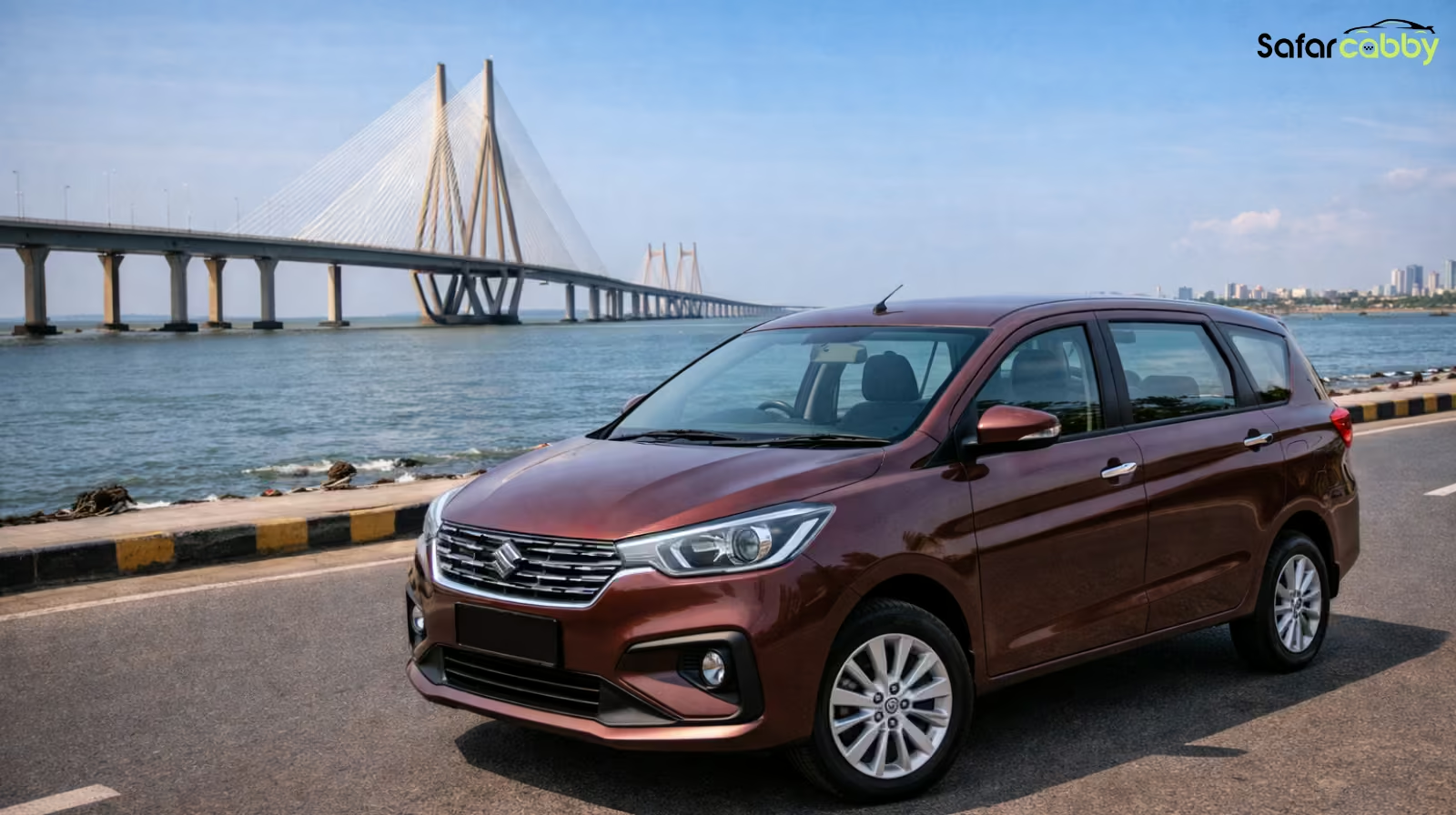
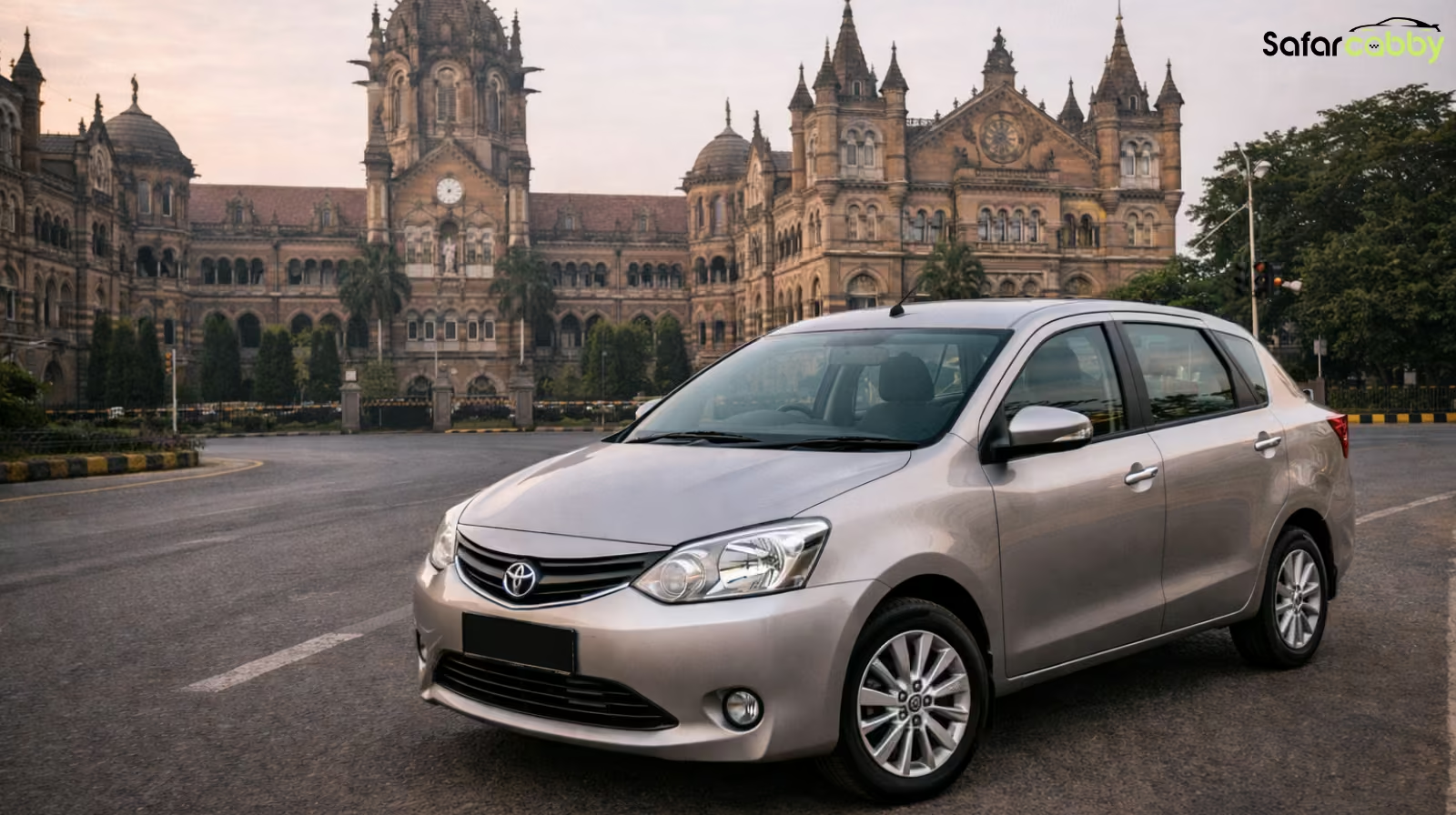
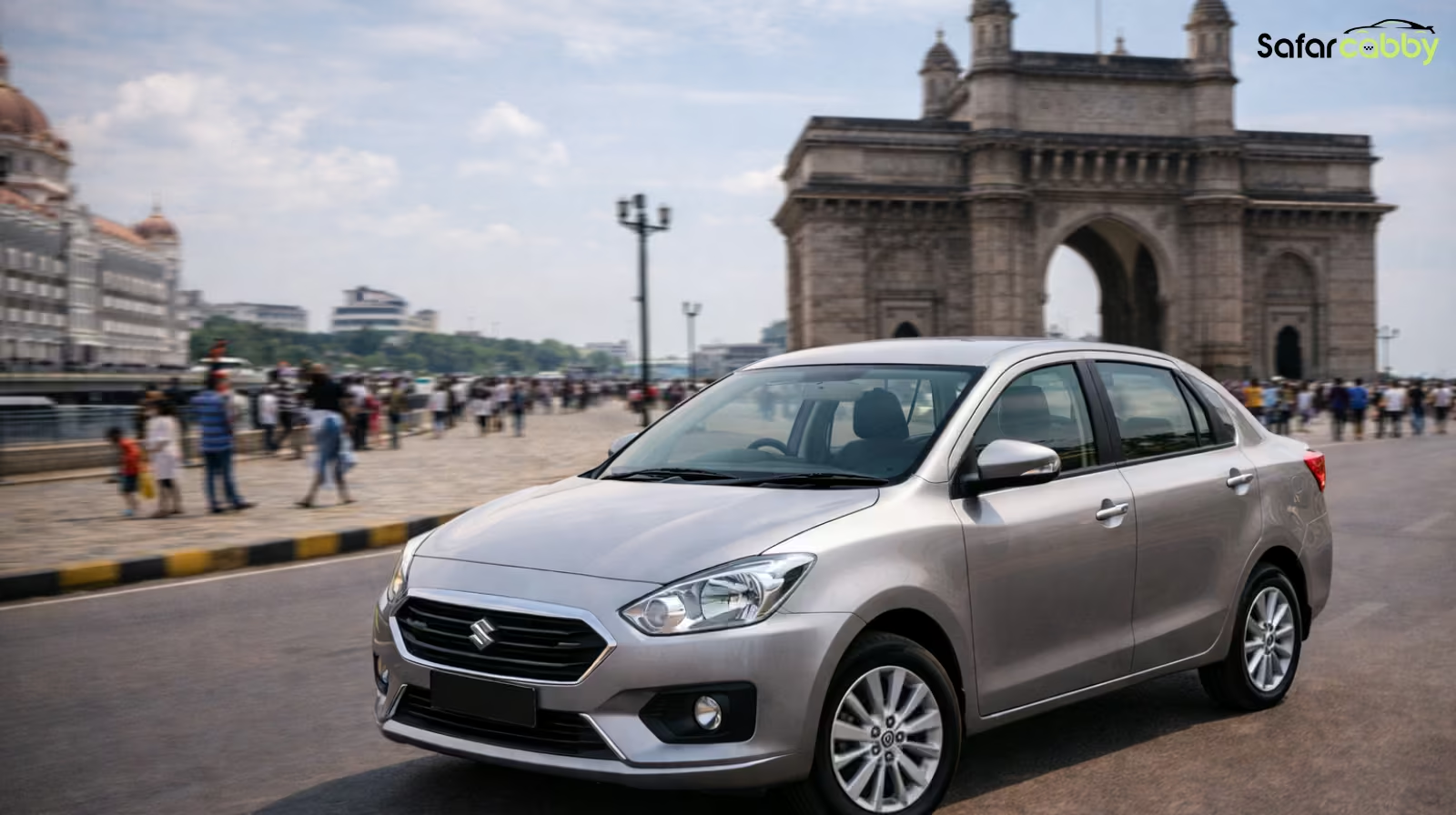
Sedan (Dzire, Etios)
4 passengers
Airport transfer in Jaisalmer, Sam Dunes day trip
₹1,500 – ₹2,200 per day
SUV / Innova Crysta price in Jaisalmer
6–7 passengers
Tanot–Longewala border run, family outstation cab
₹3,000 – ₹5,500 per day
Tempo Traveller hire in Jaisalmer
10–14 passengers
Group desert excursion, pilgrimage circuit
₹5,000 – ₹9,000 per day
Luxury sedan hire in Jaisalmer
4 passengers
Heritage hotel transfers, premium desert experience
₹6,000 – ₹12,000 per day
Self drive car rental in Jaisalmer runs slightly lower on the base rate but requires a valid driving licence and a security deposit. Chauffeur driven options include the driver's allowance in the quoted fare on SafarCabby - no separate negotiation at the end of the day.
Popular Routes from Jaisalmer
Jaisalmer to Jodhpur Road Trip
The 285-kilometre drive via NH11 takes roughly 4.5 to 5 hours and passes through the stark Thar landscape before the blue city's skyline appears on the horizon. Many travellers completing a Rajasthan circuit book an outstation cab from Jaisalmer to Jodhpur as their final leg before the return flight. The road is smooth and well-marked - a straightforward long-distance drive through open desert.
Jaisalmer to Bikaner
Around 330 kilometres via Phalodi, this route takes 5 to 6 hours and passes through some of the most sparsely populated terrain in Rajasthan. Bikaner's Junagarh Fort and the Karni Mata Rat Temple at Deshnoke make it a strong heritage combination with Jaisalmer. Booking a Jaisalmer to Bikaner taxi for a full-day run with an early departure is the standard approach.
Jaisalmer to Barmer
About 153 kilometres on the Barmer Road, this 2.5-hour drive heads deeper into the Thar and opens up access to Kiradu Temple ruins - often called the Khajuraho of Rajasthan. The road has open desert on both sides and gets strong crosswinds in May; an SUV rental from Jaisalmer handles it far better than a small hatchback.
Jaisalmer to Pokhran
Pokhran is roughly 110 kilometres from Jaisalmer and takes about 2 hours. The town is historically significant as the site of India's nuclear tests, and the Pokhran Fort is a genuine off-route heritage stop. A road trip from Jaisalmer to Pokhran makes for a half-day excursion that most group tours skip entirely.
Jaisalmer to Jaipur
The full Jaisalmer to Jaipur distance is approximately 575 kilometres and takes 8 to 9 hours via Jodhpur. Most travellers break this into two days. Booking a chauffeur driven outstation cab from Jaisalmer for this run is far more comfortable than an overnight bus, particularly with children or elderly family members.
Jaisalmer to Tanot Mata Temple
At 120 kilometres from the city on the BSF border road, Tanot is a significant pilgrimage destination and a historically resonant stop. The temple survived the 1971 war shelling and draws both devotees and history-minded travellers. There is no public transport on this route - a dedicated outstation cab from Jaisalmer is the only practical option.
Jaisalmer to Osian
Osian is about 240 kilometres via Jodhpur and is home to a cluster of 8th-century Hindu and Jain temples rising from the desert sand. Travellers doing the Jaisalmer–Jodhpur corridor often add Osian as a stop. The Jaisalmer to Osian taxi route is increasingly popular with heritage travellers who want to go beyond the fort circuit.
Weekend Trips from Jaisalmer
Sam Sand Dunes
Forty-two kilometres out on the Sam Road, the Great Thar Desert dunes are the single most visited destination from Jaisalmer. Most travellers rent a car in Jaisalmer specifically for this run - the sunset window is tight and the return after dark is not something you want to manage in a shared vehicle.
Khuhri Village
Quieter and less commercial than Sam, Khuhri is 40 kilometres southwest and offers an authentic dune experience with folk music performances in the evenings. A private cab booking in Jaisalmer for Khuhri lets you stay through the performance and leave on your schedule.
Kuldhara Ghost Village
Seventeen kilometres from the city, Kuldhara is an abandoned 13th-century village that was deserted overnight by its Paliwal Brahmin inhabitants. The ruins are atmospheric and genuinely eerie. It is a 45-minute stop on the way to Sam and easy to include on any full-day car hire circuit.
Akal Wood Fossil Park
Just 17 kilometres from Jaisalmer on the Barmer Road, this is one of the least-visited but most unusual stops in the region - 180-million-year-old tree fossils embedded in open rock. No shared transport covers this route. A taxi service in Jaisalmer booked for the morning handles it as a short detour before heading onward.
Ramdevra Temple (Ramdeora)
About 120 kilometres from Jaisalmer near Pokhran, Ramdevra is one of the most important pilgrimage sites in Rajasthan, dedicated to Baba Ramdev. It draws enormous crowds during the Ramdevra fair in August-September. Groups of pilgrims travelling from Jaisalmer frequently book a tempo traveller or SUV for this run.
Lodhruva (Lodurva)
Just 15 kilometres north of Jaisalmer, Lodurva was the ancient capital of the Bhati Rajputs before Jaisalmer was founded. The Jain temples here are beautifully restored and far less crowded than those inside the fort. It is a natural add-on to any local car hire day circuit.
Best Time to Book a Car Rental in Jaisalmer
October through February is when Jaisalmer runs at full capacity. The weather is clear, the desert is cool enough for long drives, and every attraction is accessible without the brutal heat. If your trip falls between November and February, car rental in Jaisalmer should be booked well in advance - particularly for the Desert Festival in the last week of January or first week of February, when the city fills completely and verified vendors are spoken for days ahead.
March starts warming up quickly. April and May are genuinely harsh - daytime temperatures cross 45°C and the Barmer Road sees strong dust storms that can reduce visibility suddenly. Driving in this window requires an AC vehicle in good working order. SafarCabby's vendor verification process matters most in summer, when an unreliable car on a desert highway is a real problem, not an inconvenience.
The monsoon (July–September) brings surprisingly little rain to Jaisalmer - the Thar is a rain-shadow desert. Roads stay mostly clear, crowds are minimal, and rental rates drop noticeably. October arrivals often find the best combination of manageable weather and pre-peak pricing before the tourist surge fully kicks in.
Photography Spots Worth Building a Car Rental Day Around
Sam Sand Dunes at golden hour: The light between 5:00pm and 5:45pm is the reason photographers make the 42-kilometre drive. Arrive by 4:45pm to get your position before the camel convoy crowds the ridge. A dedicated car hire in Jaisalmer means you are not dependent on a shared jeep's departure time.
Jaisalmer Fort at sunrise from Vyas Chhatri: The cenotaphs at Vyas Chhatri on the northeast edge of the city give a wide-angle view of the fort glowing in early morning light. Your driver can reach the parking point in 10 minutes from most hotels, and the spot is empty before 7am.
Kuldhara village interiors: The abandoned stone lanes and crumbling doorways photograph best in the flat light of mid-morning. It is a 20-minute drive from the city center - easy to slot into any day trip before heading to Sam.
Off-the-Beaten-Path Places Around Jaisalmer
Tazia Tower and Badal Mahal inside the fort complex are genuinely overlooked - most tourists walk past the entrance without going in. The five-storey tower built by a Muslim craftsman inside a Rajput fort is an architectural curiosity that tells you something real about Jaisalmer's history. It takes 20 minutes and costs almost nothing.
Bada Bagh, the royal cenotaphs 6 kilometres north of the city, is on most itineraries but still feels unhurried. The carved chhatris of the Bhati rulers photographed against the desert sky are striking at any time of day. A quick detour on the way back from Lodurva adds nothing to your driving time.
The Desert National Park, roughly 45 kilometres from Jaisalmer toward Sam, covers 3,162 square kilometres of protected Thar desert and is one of the few places in India where you can see the Great Indian Bustard in the wild. Entry requires a permit arranged through the Forest Department, and a 4x4 is strongly recommended for the interior tracks. Solo travellers who want to move through the park at their own pace find self drive car rental in Jaisalmer more practical than a scheduled cab - though the permit and guide requirements mean you still need to plan the day carefully.
The insider tip that most Jaisalmer first-timers miss: avoid the Shiv Road stretch between Hanuman Chowk and the fort gate between 10am and noon. This is when the tour bus convoy arrives and the lane becomes completely gridlocked. Your driver will know to use the bypass via Amar Sagar Pol - but only if they have worked these routes before. SafarCabby's vendor network in Jaisalmer includes operators who run this circuit daily, not drivers who showed up for the tourist season.
Is there public transport from Jaisalmer city to Sam Sand Dunes?
No reliable public transport runs the 42-kilometre Sam Road for tourists. Shared jeeps operate from near the bus stand but run on their own timing and return schedule, which means you lose control of the sunset window. A dedicated car hire in Jaisalmer for the Sam run is the standard approach for anyone who wants to arrive and leave on their own schedule.
How much does a full-day car rental in Jaisalmer cost?
A full-day sedan rental in Jaisalmer starts around ₹1,500 to ₹2,200 for local city coverage. SUV rentals for outstation runs to Tanot or Longewala start around ₹3,000 to ₹5,500 depending on the vehicle and vendor. Rates climb during the Desert Festival in February and around Diwali - compare vendor options on SafarCabby before confirming.
Can I book an airport transfer from Jaisalmer Airport late at night?
Yes. Jaisalmer Airport is about 5 kilometres from the city center. Pre-booking an airport transfer in Jaisalmer through SafarCabby means a verified driver is waiting when you land - the taxi queue outside the terminal is small and can be slow after late evening flights.
Is a self drive car rental practical in Jaisalmer?
For the main highways - Sam Road, Barmer Road, and the Jodhpur highway - yes, self drive car rental in Jaisalmer is straightforward. The roads are wide and relatively uncongested outside the city center. For border routes toward Tanot, you will need to check BSF access rules, which can change. A valid driving licence and security deposit are required by all vendors.
What vehicle should I book for the Tanot Mata Temple border run?
An SUV or a well-maintained sedan works for the main BSF road to Tanot, which is surfaced and maintained. The track condition can vary after monsoon season. SUV rental in Jaisalmer is the safer choice if you are also adding Longewala or any unpaved detour. Verify with your vendor that the vehicle is permitted on the border road before departure.
How early should I book a cab in Jaisalmer for the Desert Festival period?
The Jaisalmer Desert Festival runs in late January or early February depending on the lunar calendar. Cab booking in Jaisalmer for this period should happen at least 7 to 10 days in advance. Verified vendors fill up quickly and walk-in rates during the festival week are significantly higher than pre-booked fares.
Can I take a one-way outstation cab from Jaisalmer to Jodhpur?
Yes, Jaisalmer to Jodhpur is one of the most commonly booked one-way outstation cab routes in Rajasthan. The 285-kilometre drive takes approximately 4.5 to 5 hours via NH11. SafarCabby lists verified vendors for this corridor with fixed fares - no renegotiation mid-route.
Are there any road access restrictions near Jaisalmer Fort for rental cars?
Vehicles cannot enter the fort lanes - these are pedestrian-only. Your driver will park near Gopa Chowk or Amar Sagar Pol depending on the time of day. Morning visits before 9am allow parking closer to Hawa Pol. By mid-morning, the approach lanes are congested and your driver will need to hold position further back - plan for a short walk of 5 to 10 minutes from the parking point to the fort entrance.
Jaisalmer to jodhpur chamunda mata temple bike ride
Weekend Rides
Jaisalmer to jodhpur bike ride
Jaisalmer to pokaran bike ride
Jaisalmer to jalore bike ride
Jaisalmer to bikaner bike ride
Jaisalmer to osian bike ride
Jaisalmer to ramgarh bike ride
How Jaisalmer's Desert Spread Makes a Rental Car Non-Negotiable
Most cities have a compact tourist zone where you can walk between sights. Jaisalmer is not that city. The fort is in the center, but the places that make the trip memorable - Sam Sand Dunes, Kuldhara ghost village, Longewala War Memorial, Tanot Mata Temple - are spread across 40 to 120 kilometres of open desert. There is no metro, no reliable bus schedule for tourists, and shared jeep services run on their own timing. A car hire in Jaisalmer gives you control over when you leave and when you come back, which in a desert city matters enormously. The Sam Dunes sunset window is roughly 5:15pm to 6:00pm. Miss it by 30 minutes and you are paying for a camel ride in the dark.
Gopa Chowk, the lane leading up to the fort entrance, gets completely choked by 10am during peak season. If you are heading there for a morning walk, ask your driver to drop you at the Amar Sagar Pol side and wait near the Patwa Haveli parking. Drivers who work these routes regularly know this. A cab booked through SafarCabby in Jaisalmer comes with exactly this kind of local operational knowledge - not just a car, but someone who has done the run before.
Car Rental Options in Jaisalmer - What Works for Which Trip
Local city rental: A half-day or full-day local car hire in Jaisalmer works well for covering the fort, havelis, Gadisar Lake, and the local markets in one circuit. Parking near Gadisar is manageable in the morning but fills up fast after 11am. A chauffeur driven rental for the day means your driver handles the parking while you walk in.
Outstation trips: For Longewala, Tanot, or a border excursion, an outstation cab from Jaisalmer booked for a full day is the only practical option. These roads are long, straight, and empty - which sounds easy until you realize there are no petrol pumps for stretches of 60 to 80 kilometres. A verified vendor from SafarCabby will have a vehicle that is fuelled and checked before departure, not one that runs on optimism.
Self drive rentals: Solo travellers and couples who want to stop at every sand ridge and take their time through Khuhri village find that self drive car rental in Jaisalmer gives them a freedom that a scheduled cab simply cannot. You set the pace. You decide if Kuldhara gets two hours or twenty minutes. No driver waiting, no awkward hurrying.
Group travel: Families of eight or more heading together to Sam or on a multi-day circuit toward Bikaner find that a single tempo traveller in Jaisalmer is far more economical and practical than splitting across two sedans - especially on the open desert highway where staying together matters.
One-way trips: Jaisalmer to Jodhpur is a popular one-way corridor. Many travellers fly into Jaisalmer and take the road back to Jodhpur for the return flight. A one-way outstation cab from Jaisalmer on this route takes roughly 4.5 to 5 hours via NH11 and is significantly more comfortable than the overnight bus, especially with luggage and children.
Planning Your Days - A Jaisalmer Itinerary That Actually Fits a Car
Day one is typically the fort and the old city. Start early - the fort lanes are narrow and quiet before 8am. Your driver parks outside the Hawa Pol gate while you walk the interior. Patwon Ki Haveli, Nathmal Ki Haveli, and the Jain temples inside the fort are all walkable from there. By afternoon, Gadisar Lake is worth an hour. Leave for Sam Sand Dunes by 4pm at the latest. The 42-kilometre drive on the Sam Road takes about 45 minutes, and arriving by 5pm gives you the full sunset window.
Day two is the border run. Tanot Mata Temple is 120 kilometres from the city on the BSF road toward the Pakistan border. The temple itself is striking - it survived the 1971 war shelling largely intact, and the BSF manages it with a museum of unexploded shells. Leave by 7:30am. The road is smooth but long, and you want to be back before afternoon heat peaks. Longewala is 10 kilometres past Tanot - the war memorial and tank display are worth the extra stop.
If your flight lands at Jaisalmer Airport after 8pm and you have a Tanot excursion planned for the next morning, a pre-booked airport transfer in Jaisalmer waiting at the terminal saves you 40 minutes of negotiating with the auto and taxi queue outside. It also means your driver already knows your next day's plan.
SUV Rentals for the Desert Routes Around Jaisalmer
Sedans handle the main highways fine, but the track into Khuhri village, the sandy approach roads near Sam, and the unpaved stretch toward Akal Wood Fossil Park all benefit from higher ground clearance. SUV rental in Jaisalmer is the practical choice for anyone covering more than one desert excursion in a day. An Innova Crysta or similar 7-seater also handles the luggage load that a group of four carries on a week-long Rajasthan circuit without the boot-cramming of a sedan.
October through February is peak travel season in Jaisalmer. SUV availability tightens considerably during the Jaisalmer Desert Festival in February - the city fills up and every verified rental vendor gets booked out. If your trip falls in that window, cab booking in Jaisalmer should happen at least a week in advance, not the night before.
Activities and Experiences Worth Building Your Car Rental Around
The camel safari at Sam Sand Dunes is the obvious one, but the experience around it matters as much as the ride itself. Arriving by private car means you choose your operator at the dunes rather than being bundled into a package by your hotel. The fossil park at Akal, 17 kilometres from the city, is a genuinely unusual stop - 180-million-year-old tree fossils embedded in rock - and virtually no shared jeep service includes it. A taxi service in Jaisalmer booked for the full day handles these additions without renegotiation.
The Khuhri sand dunes, 40 kilometres southwest of Jaisalmer, are less crowded than Sam and offer a quieter sunset experience. The village folk music performances in the evening are worth staying for, which means your return drive happens after dark - another reason a pre-booked cab service in Jaisalmer beats a shared arrangement where other passengers set the departure time.
Car Rental Prices in Jaisalmer
Car rental in Jaisalmer starts at approximately ₹1,200 for a hatchback on a half-day local hire and ranges up to ₹6,000 or more for a full-day SUV outstation run to Tanot or Longewala. Prices vary based on vehicle type, rental duration, local versus outstation travel, and peak season demand. The Desert Festival in February and Diwali week in October-November are the two periods where rates climb most noticeably. Compare vendor options on SafarCabby before confirming - rates for the same route can vary by 20 to 30 percent across vendors during peak weeks.
Vehicle Category
Capacity
Ideal Use Case
Estimated Starting Price
Hatchback (Swift, WagonR)
4 passengers
Local city sightseeing, fort and haveli circuit
₹1,200 – ₹1,800 per day
Sedan (Dzire, Etios)
4 passengers
Airport transfer in Jaisalmer, Sam Dunes day trip
₹1,500 – ₹2,200 per day
SUV / Innova Crysta price in Jaisalmer
6–7 passengers
Tanot–Longewala border run, family outstation cab
₹3,000 – ₹5,500 per day
Tempo Traveller hire in Jaisalmer
10–14 passengers
Group desert excursion, pilgrimage circuit
₹5,000 – ₹9,000 per day
Luxury sedan hire in Jaisalmer
4 passengers
Heritage hotel transfers, premium desert experience
₹6,000 – ₹12,000 per day
Self drive car rental in Jaisalmer runs slightly lower on the base rate but requires a valid driving licence and a security deposit. Chauffeur driven options include the driver's allowance in the quoted fare on SafarCabby - no separate negotiation at the end of the day.
Popular Routes from Jaisalmer
Jaisalmer to Jodhpur Road Trip
The 285-kilometre drive via NH11 takes roughly 4.5 to 5 hours and passes through the stark Thar landscape before the blue city's skyline appears on the horizon. Many travellers completing a Rajasthan circuit book an outstation cab from Jaisalmer to Jodhpur as their final leg before the return flight. The road is smooth and well-marked - a straightforward long-distance drive through open desert.
Jaisalmer to Bikaner
Around 330 kilometres via Phalodi, this route takes 5 to 6 hours and passes through some of the most sparsely populated terrain in Rajasthan. Bikaner's Junagarh Fort and the Karni Mata Rat Temple at Deshnoke make it a strong heritage combination with Jaisalmer. Booking a Jaisalmer to Bikaner taxi for a full-day run with an early departure is the standard approach.
Jaisalmer to Barmer
About 153 kilometres on the Barmer Road, this 2.5-hour drive heads deeper into the Thar and opens up access to Kiradu Temple ruins - often called the Khajuraho of Rajasthan. The road has open desert on both sides and gets strong crosswinds in May; an SUV rental from Jaisalmer handles it far better than a small hatchback.
Jaisalmer to Pokhran
Pokhran is roughly 110 kilometres from Jaisalmer and takes about 2 hours. The town is historically significant as the site of India's nuclear tests, and the Pokhran Fort is a genuine off-route heritage stop. A road trip from Jaisalmer to Pokhran makes for a half-day excursion that most group tours skip entirely.
Jaisalmer to Jaipur
The full Jaisalmer to Jaipur distance is approximately 575 kilometres and takes 8 to 9 hours via Jodhpur. Most travellers break this into two days. Booking a chauffeur driven outstation cab from Jaisalmer for this run is far more comfortable than an overnight bus, particularly with children or elderly family members.
Jaisalmer to Tanot Mata Temple
At 120 kilometres from the city on the BSF border road, Tanot is a significant pilgrimage destination and a historically resonant stop. The temple survived the 1971 war shelling and draws both devotees and history-minded travellers. There is no public transport on this route - a dedicated outstation cab from Jaisalmer is the only practical option.
Jaisalmer to Osian
Osian is about 240 kilometres via Jodhpur and is home to a cluster of 8th-century Hindu and Jain temples rising from the desert sand. Travellers doing the Jaisalmer–Jodhpur corridor often add Osian as a stop. The Jaisalmer to Osian taxi route is increasingly popular with heritage travellers who want to go beyond the fort circuit.
Weekend Trips from Jaisalmer
Sam Sand Dunes
Forty-two kilometres out on the Sam Road, the Great Thar Desert dunes are the single most visited destination from Jaisalmer. Most travellers rent a car in Jaisalmer specifically for this run - the sunset window is tight and the return after dark is not something you want to manage in a shared vehicle.
Khuhri Village
Quieter and less commercial than Sam, Khuhri is 40 kilometres southwest and offers an authentic dune experience with folk music performances in the evenings. A private cab booking in Jaisalmer for Khuhri lets you stay through the performance and leave on your schedule.
Kuldhara Ghost Village
Seventeen kilometres from the city, Kuldhara is an abandoned 13th-century village that was deserted overnight by its Paliwal Brahmin inhabitants. The ruins are atmospheric and genuinely eerie. It is a 45-minute stop on the way to Sam and easy to include on any full-day car hire circuit.
Akal Wood Fossil Park
Just 17 kilometres from Jaisalmer on the Barmer Road, this is one of the least-visited but most unusual stops in the region - 180-million-year-old tree fossils embedded in open rock. No shared transport covers this route. A taxi service in Jaisalmer booked for the morning handles it as a short detour before heading onward.
Ramdevra Temple (Ramdeora)
About 120 kilometres from Jaisalmer near Pokhran, Ramdevra is one of the most important pilgrimage sites in Rajasthan, dedicated to Baba Ramdev. It draws enormous crowds during the Ramdevra fair in August-September. Groups of pilgrims travelling from Jaisalmer frequently book a tempo traveller or SUV for this run.
Lodhruva (Lodurva)
Just 15 kilometres north of Jaisalmer, Lodurva was the ancient capital of the Bhati Rajputs before Jaisalmer was founded. The Jain temples here are beautifully restored and far less crowded than those inside the fort. It is a natural add-on to any local car hire day circuit.
Best Time to Book a Car Rental in Jaisalmer
October through February is when Jaisalmer runs at full capacity. The weather is clear, the desert is cool enough for long drives, and every attraction is accessible without the brutal heat. If your trip falls between November and February, car rental in Jaisalmer should be booked well in advance - particularly for the Desert Festival in the last week of January or first week of February, when the city fills completely and verified vendors are spoken for days ahead.
March starts warming up quickly. April and May are genuinely harsh - daytime temperatures cross 45°C and the Barmer Road sees strong dust storms that can reduce visibility suddenly. Driving in this window requires an AC vehicle in good working order. SafarCabby's vendor verification process matters most in summer, when an unreliable car on a desert highway is a real problem, not an inconvenience.
The monsoon (July–September) brings surprisingly little rain to Jaisalmer - the Thar is a rain-shadow desert. Roads stay mostly clear, crowds are minimal, and rental rates drop noticeably. October arrivals often find the best combination of manageable weather and pre-peak pricing before the tourist surge fully kicks in.
Photography Spots Worth Building a Car Rental Day Around
Sam Sand Dunes at golden hour: The light between 5:00pm and 5:45pm is the reason photographers make the 42-kilometre drive. Arrive by 4:45pm to get your position before the camel convoy crowds the ridge. A dedicated car hire in Jaisalmer means you are not dependent on a shared jeep's departure time.
Jaisalmer Fort at sunrise from Vyas Chhatri: The cenotaphs at Vyas Chhatri on the northeast edge of the city give a wide-angle view of the fort glowing in early morning light. Your driver can reach the parking point in 10 minutes from most hotels, and the spot is empty before 7am.
Kuldhara village interiors: The abandoned stone lanes and crumbling doorways photograph best in the flat light of mid-morning. It is a 20-minute drive from the city center - easy to slot into any day trip before heading to Sam.
Off-the-Beaten-Path Places Around Jaisalmer
Tazia Tower and Badal Mahal inside the fort complex are genuinely overlooked - most tourists walk past the entrance without going in. The five-storey tower built by a Muslim craftsman inside a Rajput fort is an architectural curiosity that tells you something real about Jaisalmer's history. It takes 20 minutes and costs almost nothing.
Bada Bagh, the royal cenotaphs 6 kilometres north of the city, is on most itineraries but still feels unhurried. The carved chhatris of the Bhati rulers photographed against the desert sky are striking at any time of day. A quick detour on the way back from Lodurva adds nothing to your driving time.
The Desert National Park, roughly 45 kilometres from Jaisalmer toward Sam, covers 3,162 square kilometres of protected Thar desert and is one of the few places in India where you can see the Great Indian Bustard in the wild. Entry requires a permit arranged through the Forest Department, and a 4x4 is strongly recommended for the interior tracks. Solo travellers who want to move through the park at their own pace find self drive car rental in Jaisalmer more practical than a scheduled cab - though the permit and guide requirements mean you still need to plan the day carefully.
The insider tip that most Jaisalmer first-timers miss: avoid the Shiv Road stretch between Hanuman Chowk and the fort gate between 10am and noon. This is when the tour bus convoy arrives and the lane becomes completely gridlocked. Your driver will know to use the bypass via Amar Sagar Pol - but only if they have worked these routes before. SafarCabby's vendor network in Jaisalmer includes operators who run this circuit daily, not drivers who showed up for the tourist season.
 Trusted
  Verified Car Rental