Guwahati doesn't really function like a destination city. It functions like a launchpad. The Brahmaputra runs wide and brown along its northern edge, the Nilachal Hill rises to the west with the Kamakhya Temple at its crest, and beyond the city limits, every cardinal direction opens into something extraordinary - rhino country to the east, living root bridges to the south, the Himalayan foothills to the north. Most travellers who fly into Lokpriya Gopinath Bordoloi International Airport are thinking about somewhere else within 24 hours of landing. That's not a slight against Guwahati. It's just the nature of being the most important transit hub in Northeast India.
What this means practically is that a rental car here serves a different purpose than it does in most Indian cities. In Jaipur, you rent a car to move between forts and palaces. In Mumbai, you rent to escape traffic on your own terms. In Guwahati, you rent a car because the Northeast is vast, the public transport thins out fast beyond city limits, and the distances between the places you actually want to see are measured in mountain roads, river crossings, and wildlife sanctuary corridors - not metro stations.
Guwahati's Geography and Why It Shapes Every Rental Decision
The city sits at the confluence of the Brahmaputra valley and the foothills of the Shillong Plateau, which means the terrain around it changes fast. Drive thirty kilometres south and you're climbing into Meghalaya. Drive east on NH27 and the landscape opens into Assam's floodplains, the tea gardens of Nagaon district, and eventually the grasslands around Kaziranga. Drive north across the Saraighat Bridge and you're on the road toward Tezpur and the Arunachal Pradesh frontier.
Historically, Guwahati - once called Pragjyotishpura, the City of Eastern Light - was the seat of the Kamrupa kingdom and a major centre of Tantric scholarship. The Kamakhya Temple on Nilachal Hill has drawn pilgrims for centuries and continues to be one of the most visited religious sites in the country. The city's modern identity as a commercial and administrative hub grew through the 20th century, and today it holds the region's largest airport, its most significant rail junction, and the headquarters of the Northeast Frontier Railway. All of which makes it the natural starting point for anyone entering the region.
Road Trips from Guwahati - Where NH27 and NH17 Actually Take You
The NH27 is the spine of Assam. It runs east from Guwahati through Nagaon, past the edges of Kaziranga National Park, and continues toward Jorhat, Dibrugarh, and the Arunachal border. Most of the great Assam road trips follow this corridor at least partially. The drive to Kaziranga alone - roughly 200 kilometres - takes you through tea estate country, past the Kaliabor area, and into the park zone where speed limits drop sharply and elephant crossings are not metaphorical.
South of the city, NH17 drops into Meghalaya within 30 kilometres. Shillong is 100 kilometres from Guwahati by road, and the drive through the Meghalaya plateau is one of the more underrated journeys in Northeast India - pine forests, sudden viewpoints over the plains, and the cool air that arrives as you gain altitude. Most travellers who book a one-way cab from Guwahati to Shillong do exactly that: one way. They plan to explore Meghalaya by a different vehicle or come back via Cherrapunji.
Groups of eight or more heading on multi-day Northeast circuits - covering Shillong, Cherrapunji, and Dawki in one loop - often find tempo traveller hire in Guwahati more economical than splitting across two SUVs, particularly when the route involves luggage-heavy family travel.
Guwahati to Kaziranga
The 200-kilometre drive along NH27 is Assam's most iconic road trip. Travellers book rental cars and cabs for this route to time their arrival for the early morning jeep safari slots. Most experienced drivers on this corridor know the wildlife zone speed limits and the specific stretches where the forest department checks are thorough.
Guwahati to Shillong
A 100-kilometre climb onto the Meghalaya plateau. The road from Jorabat - the last major junction before the state border - rises steadily through pine-covered ridges. Many travellers use this as a one-way cab booking and then rent locally in Shillong for the Cherrapunji extension.
Guwahati to Tezpur
Roughly 180 kilometres northeast via NH15, Tezpur sits on the Brahmaputra and serves as the gateway to Nameri National Park and the road toward Arunachal Pradesh. The drive is flat through the Assam valley and manageable in under four hours.
Guwahati to Dawki
The crystal-clear Umngot River at Dawki on the Bangladesh border has become one of the most photographed places in Northeast India. The road goes through Shillong and then drops sharply into the Jaintia Hills - a full-day outstation trip that most travellers prefer with a chauffeur-driven vehicle given the steep descents.
Guwahati to Manas National Park
Around 140 kilometres northwest via NH27 and then branching toward Barpeta Road, Manas is a UNESCO World Heritage Site and a significantly less crowded alternative to Kaziranga. The route passes through the Bodoland region and requires some local road knowledge - another reason travellers consistently prefer verified vendors over unverified operators for this stretch.
Weekend Trips from Guwahati
Pobitora Wildlife Sanctuary
Just 48 kilometres east of the city, Pobitora has the highest density of one-horned rhinoceroses in the world - a fact that surprises most visitors who assumed Kaziranga held that title. It's a genuine half-day trip from Guwahati, and many travellers combine it with a Brahmaputra river island visit the same day.
Hajo
Around 30 kilometres northwest of Guwahati, Hajo is one of those places that doesn't appear on most travel itineraries but probably should. It's a rare confluence of Hindu, Muslim, and Buddhist pilgrimage sites - the Hayagriva Madhab Temple, the Powa Mecca mosque, and a Buddhist monastery within a few kilometres of each other. Most visitors rent a car for a half-day circuit that covers all three.
Sualkuchi
Known as the silk village of Assam, Sualkuchi sits 35 kilometres northwest of Guwahati across the Brahmaputra. The town produces Assam's famous muga and pat silk, and the weaving workshops are open to visitors. It's an easy half-day trip that combines well with a Brahmaputra cruise.
Madan Kamdev
Often called the Khajuraho of Assam, the Madan Kamdev ruins are around 40 kilometres north of the city near Baihata Chariali. The medieval sculptural fragments scattered across a hillside are genuinely impressive and almost entirely uncrowded - the kind of place you can spend two hours without seeing another tourist.
Basistha Ashram and Chandubi Lake
Basistha is practically within the city limits, while Chandubi Lake - formed by the 1897 Assam earthquake - sits about 64 kilometres south. Together they make a practical day loop for travellers with limited time who still want something beyond the city's main pilgrimage sites.
Exploring Guwahati Itself - The City Doesn't Walk Well
Within the city, the distances between key sites are deceptive. The Kamakhya Temple on Nilachal Hill, Umananda Island in the middle of the Brahmaputra, the Navagraha Temple on Chitrachal Hill, and the Assam State Museum near Dighalipukhuri tank are all spread across a city where the road network is complicated by the river to the north and hills everywhere else. Auto-rickshaws work for short hops, but covering multiple sites in a day is genuinely easier with a dedicated cab.
One thing worth knowing before you plan a morning visit to Kamakhya: the road up Nilachal Hill narrows significantly above the lower parking area, and during major festivals it becomes effectively one-directional under police management. If your driver has done this route before, they'll know which side road cuts back down without joining the main queue. SafarCabby's vendors operating in Guwahati tend to have drivers with this kind of local familiarity - it's not a generic booking platform but a network built on city-level route knowledge.
Travellers who want to explore the quieter riverfront ghats and the lanes around Fancy Bazaar at their own pace - stopping when something looks interesting, doubling back without a driver waiting - sometimes find self drive car rental in Guwahati more practical than a scheduled cab, particularly for multi-hour city circuits where a fixed itinerary doesn't suit the day.
Activities, Experiences, and What Actually Requires a Car
The Brahmaputra river cruise from Uzanbazar Ghat is one of the city's most atmospheric experiences - a flat-bottomed boat ride across to Umananda Island, the world's smallest inhabited river island, with the Guwahati skyline behind you and the Shillong Plateau visible on the horizon. The ghat is accessible by cab, but the timing matters: morning departures catch the light better, and the ferry schedule is loose enough that arriving early by your own transport beats waiting for a shared auto.
For travellers interested in birding, the wetlands around the Deepor Beel Wildlife Sanctuary - a Ramsar site on the southwestern edge of the city - are best reached by car. The sanctuary road is not well-served by public transport, and the best viewing is in the early morning when the bird activity peaks. October through March, when most travellers rent a car in Guwahati for wildlife and nature trips, the highway conditions are at their most reliable and the visibility across the floodplains is exceptional.
For destination weddings and corporate events - Guwahati hosts a significant number of both, given its status as the region's largest city - luxury car rental in Guwahati covers everything from airport pickup convoys to wedding procession vehicles, with vendors who operate premium sedans and SUVs across the city's hotel and banquet circuits.
Off-the-Beaten-Path: What the Standard Itineraries Miss
Most travel guides for Guwahati cover Kamakhya, Umananda, and Kaziranga. That's fine as far as it goes. But the region around the city has layers that reward travellers who move beyond the obvious circuit.
The Chakrashila Wildlife Sanctuary in Dhubri district, roughly 200 kilometres west of Guwahati along the Assam-West Bengal border, is one of only two protected habitats for the golden langur in the world. It receives a fraction of Kaziranga's visitor numbers and requires a full day's drive - the kind of trip where having a verified driver who knows the route to Kokrajhar and the turnoff to Bilasipara matters.
Bhuban Pahar, a low hill south of the city with ancient rock carvings, is almost unknown outside local circles. The road in is rough enough that a sedan will struggle - this is SUV territory. Similarly, the Srimanta Sankardeva Kalakshetra cultural complex near Panjabari is worth two to three hours but rarely appears on tourist itineraries despite being one of the best cultural museums in the Northeast.
If your flight lands at Guwahati airport after 9pm and you have an early morning drive toward Kaziranga the next day, having a pre-booked cab waiting at the terminal means you don't lose two hours negotiating fares outside the arrivals gate and then spend the night unable to find a hotel transfer at that hour. The airport is around 23 kilometres from the city centre via NH27, and late-night traffic is light - but only if you're already moving.
Itinerary Planning - Building a Northeast Circuit from Guwahati
A practical 5-day circuit from Guwahati might look like this: Day 1 covers the city - Kamakhya, Umananda, Navagraha, and the Brahmaputra cruise. Day 2 is the drive to Kaziranga, arriving in time for an afternoon safari. Day 3 is a second safari and the drive back via Pobitora for a rhino encounter at close range. Day 4 is Shillong via Jorabat, with time at Ward's Lake and Police Bazaar. Day 5 is Cherrapunji - the living root bridges at Nongriat if you're willing to do the steps, or the viewpoints over Bangladesh if you're not. Back to Guwahati for a late flight or overnight.
This circuit covers roughly 700 kilometres of road across two states. It works best with one SUV and a driver who has done these routes before - someone who knows that the Kaziranga speed limits are enforced by cameras now, that the Jorabat checkpoint into Meghalaya occasionally requires vehicle documentation, and that the Nongriat trail descent takes longer than Google Maps suggests.
Airport and Station Transfers
Lokpriya Gopinath Bordoloi International Airport handles a significant volume of regional traffic - flights from Delhi, Kolkata, Mumbai, and direct connections to several Northeast state capitals. The airport sits on the city's western edge, roughly 23 kilometres from the commercial centre around Fancy Bazaar and Paltan Bazaar. Cab availability outside the terminal is inconsistent, particularly for early morning arrivals and late-night flights.
Pre-booking an airport transfer through SafarCabby means a confirmed vehicle at a transparent per-kilometre fare - no surge pricing for midnight arrivals, no negotiation outside the terminal. For travellers continuing directly to Shillong or Kaziranga from the airport without stopping in the city, outstation pickups from the airport are available on the platform and often more efficient than booking a city cab and then a separate outstation vehicle.
Guwahati railway station - one of the Northeast's busiest junctions - sits in the heart of the city. Station pickups, particularly during festival periods when the Kamakhya pilgrimage traffic peaks, are significantly easier with a pre-booked cab than with on-the-spot hiring at the station forecourt.
Car Rental Prices in Guwahati
Pricing for car rental in Guwahati reflects both the city's role as a transit hub and the longer outstation distances typical of Northeast travel. Local city rentals tend to be priced competitively, while outstation rates - particularly for Kaziranga, Shillong, and multi-day Northeast circuits - vary based on vehicle type, route, and season. Below are approximate starting price ranges to give travellers a realistic planning baseline. Actual rates depend on vendor, duration, and booking timing.
| Vehicle Category | Capacity | Ideal Use Case | Estimated Starting Price |
|---|
| Hatchback (WagonR, Swift) | 4 passengers | City sightseeing, Hajo, Pobitora day trips | ₹1,200 – ₹1,600 per day (local) |
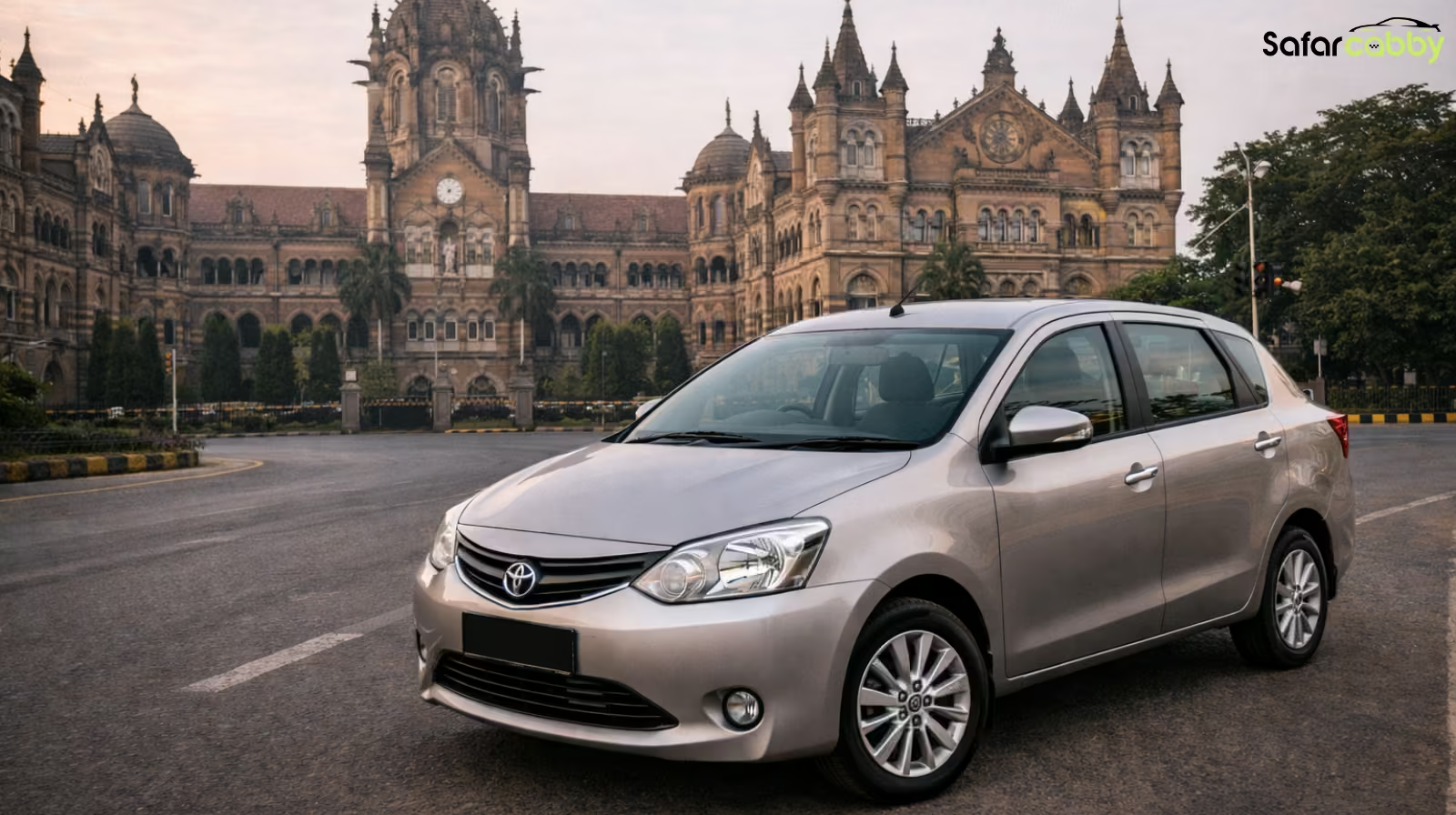
| Sedan (Dzire, Etios) | 4 passengers | Airport transfers, Shillong one-way, city rental | ₹1,500 – ₹2,200 per day (local) |
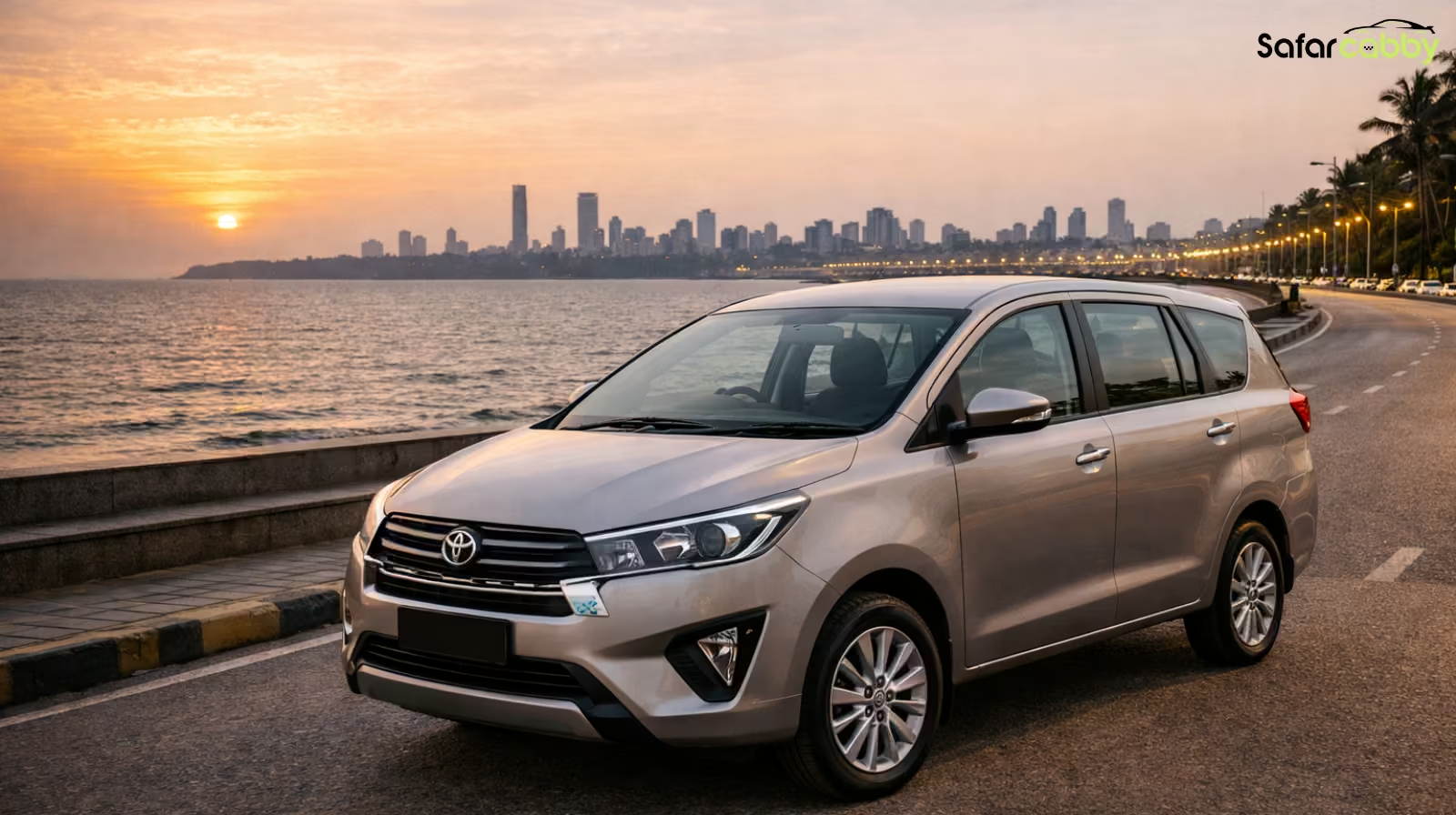
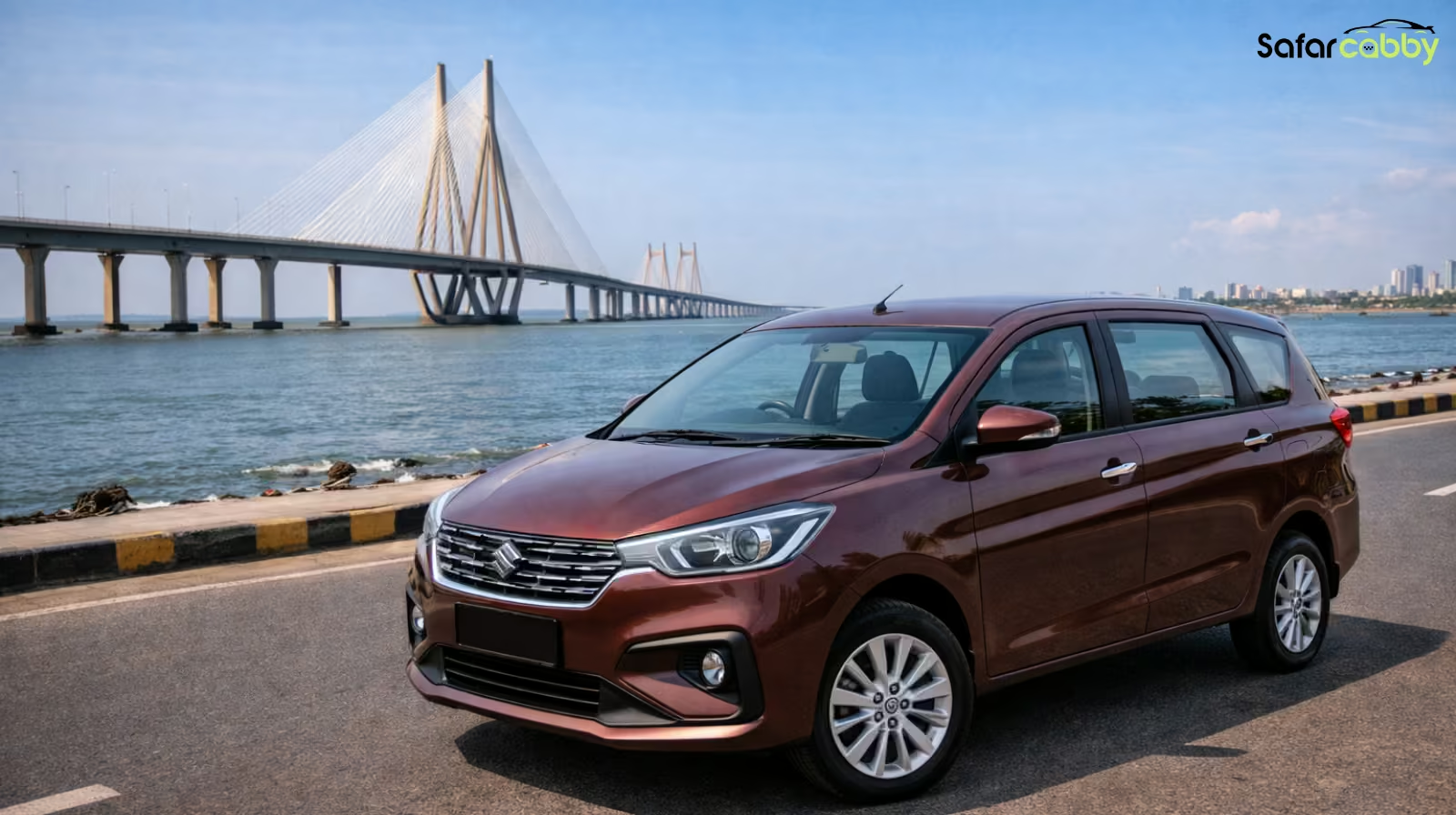
| SUV (Innova Crysta, Ertiga) | 6–7 passengers | Kaziranga circuit, Tezpur, multi-day Northeast trips | ₹2,800 – ₹4,500 per day (outstation) |
| Innova Crysta price in Guwahati | 7 passengers | Family outstation, Arunachal border routes | ₹3,200 – ₹5,000 per day |
| Tempo Traveller (12–14 seater) | 12–14 passengers | Group circuits, wedding convoys, pilgrimage groups | ₹5,500 – ₹9,000 per day |
| Luxury sedan hire in Guwahati | 4 passengers | Corporate travel, premium airport transfers, events | ₹4,000 – ₹7,000 per day |
Outstation rates are typically calculated per kilometre (₹12–₹18/km for sedans, ₹16–₹22/km for SUVs) with a minimum daily kilometre guarantee. During the Ambubachi Mela in June and the peak winter travel season from November through February, demand for verified vehicles on the Kaziranga and Shillong corridors rises sharply - booking in advance on SafarCabby gives you confirmed pricing rather than a seasonal rate negotiated at the last minute.
Best Time to Visit Guwahati
October through April is the most reliable window for road travel around Guwahati. The monsoon retreats from Assam by late September, and from October the highways are clear, the wildlife sanctuaries are open, and the Brahmaputra has dropped to its post-flood levels. The Kaziranga circuit is best done between November and March - the grass has been cut back, rhino sightings are easier, and the morning fog on NH27 lifts by mid-morning rather than lingering until noon.
The Ambubachi Mela at Kamakhya - held in June during the monsoon - draws hundreds of thousands of pilgrims and is one of the most significant Tantric festivals in the country. Road access to Nilachal Hill during this period is heavily managed, and the entire Guwahati hotel inventory fills weeks in advance. Travellers visiting during Ambubachi should book both accommodation and transport well ahead; rental vehicles during this period command a premium and availability tightens fast.
Bihu - celebrated three times a year, with Bohag Bihu in April being the most festive - brings a different kind of travel surge: domestic visitors from across Assam and the Northeast converging on the city for cultural programmes. The city is vibrant and worth experiencing, but road traffic on the national highways in and out of Guwahati is noticeably heavier during the four or five days around the main celebration.
Photography Spots Worth the Drive
- Umananda Island at dawn - The first ferry crosses from Uzanbazar Ghat around 7am. The light on the Brahmaputra at this hour, with the city skyline softening in the morning haze, is the kind of shot that requires being on the water before the tourist crowd arrives. A pre-booked cab to the ghat by 6:30am makes this possible.
- Kamakhya Temple gopuram at dusk - The temple faces west, which means late afternoon light hits the main gopuram directly. The road up Nilachal Hill is manageable in the late afternoon when the pilgrimage rush has eased. The view from the temple forecourt over the Brahmaputra valley is one of the best elevated viewpoints in the city.
- Deepor Beel in winter - Between November and February, the wetland fills with migratory birds - bar-headed geese, greater adjutant storks, and a rotating cast of waterfowl. The best light is early morning. The sanctuary access road off Rani Gate is easy enough to navigate by car but not by any other form of transport at that hour.
 Verified Car Rental
 Trusted