Goa divides itself naturally. North Goa - Calangute, Baga, Anjuna, Vagator, Morjim, Arambol - is where the action concentrates: the markets, the beach clubs, the packed shack strips, the Tuesday night bazaar at Anjuna that spills across three lanes of road. South Goa - Palolem, Agonda, Benaulim, Colva, Cabo de Rama - is quieter, longer, and rewards the kind of traveller who wants a beach that does not echo. The distance between the two halves is roughly 55 kilometres, and no public transport system connects them with any useful frequency.
A rented bike solves this immediately. On a scooter, Calangute to Palolem takes about an hour and fifteen minutes via the NH66 - a coastal highway that runs parallel to the sea and passes through Margao, the commercial capital of South Goa, where you can stop at a Goan bakery and eat a pão de queijo that costs twelve rupees. That detour through Margao's market lanes is not on any tourist itinerary. It exists only for the rider who is not locked into a cab route.
Families travelling with young children or older relatives who prefer not to ride in the open air often split the group - bikes for the riders, and car rental in Goa for those who want AC comfort and luggage space on the longer transfers between North and South Goa. That combination is common, practical, and costs less than booking two cabs for every day of the trip.
Goa's Riding History Is Older Than Its Tourism Industry
Before Goa became the most Instagrammed coastline in India, it was a Portuguese colony with a road network built for ox carts and colonial administrators. The roads that connect Panaji to Old Goa to Ponda are narrow, tree-lined, and shaded by enormous mango and jackfruit canopies - not designed for four-lane traffic, but perfect for a two-wheeler moving at 40 kmph. When the first wave of travellers arrived in the 1970s - mostly European backpackers who had crossed overland - they rented whatever motorcycle was available locally and rode the coast. That culture never left.
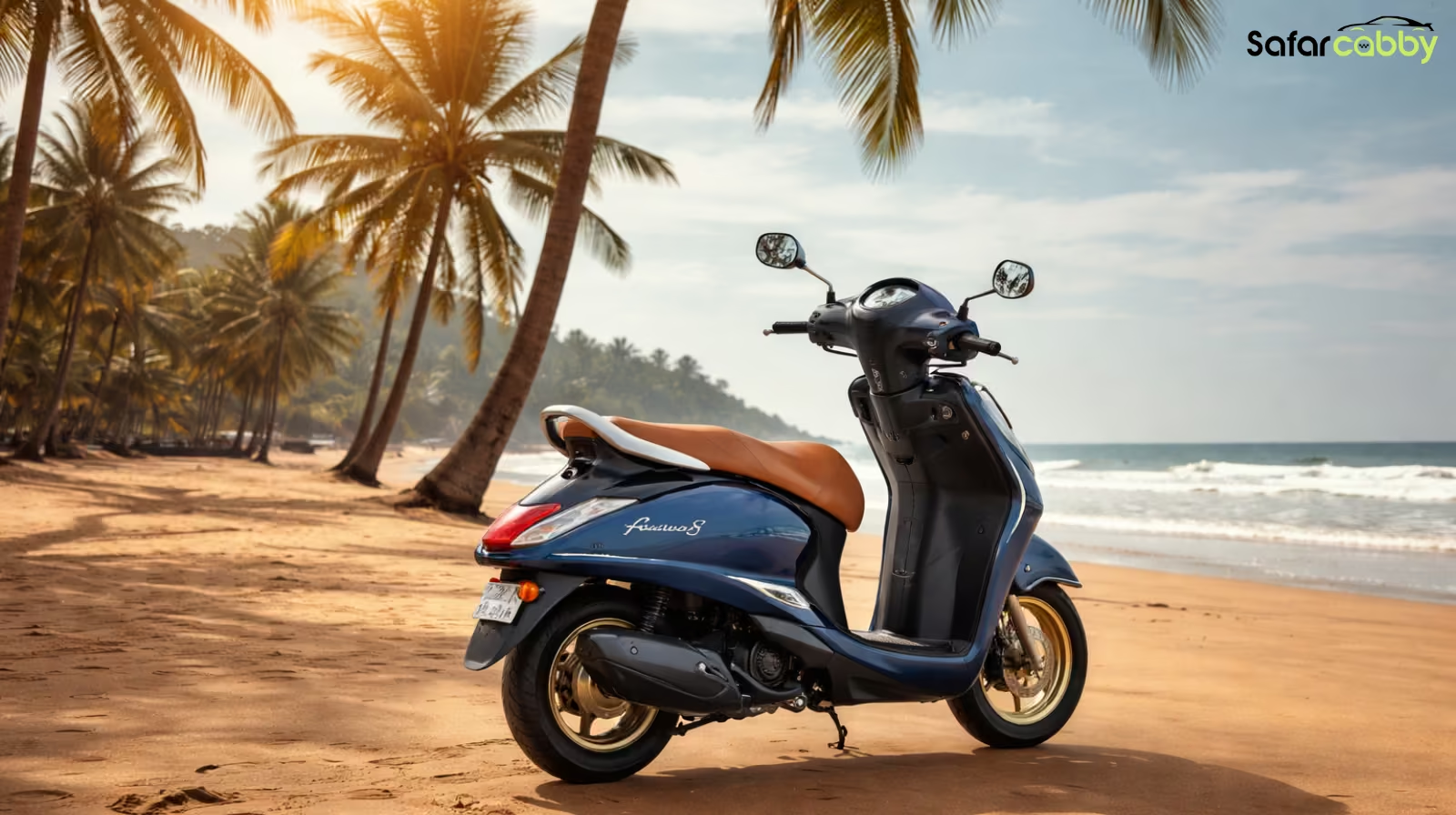
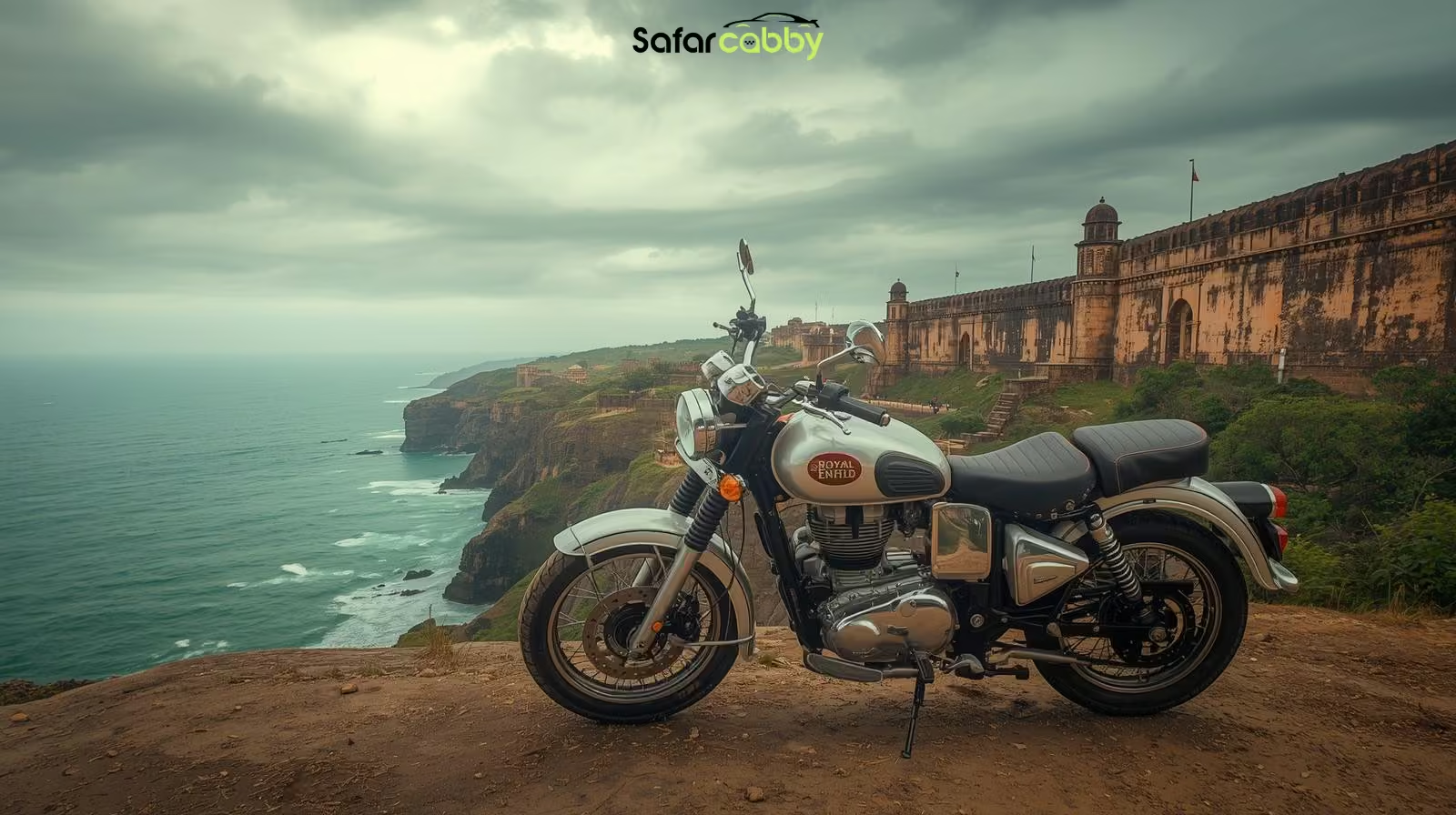
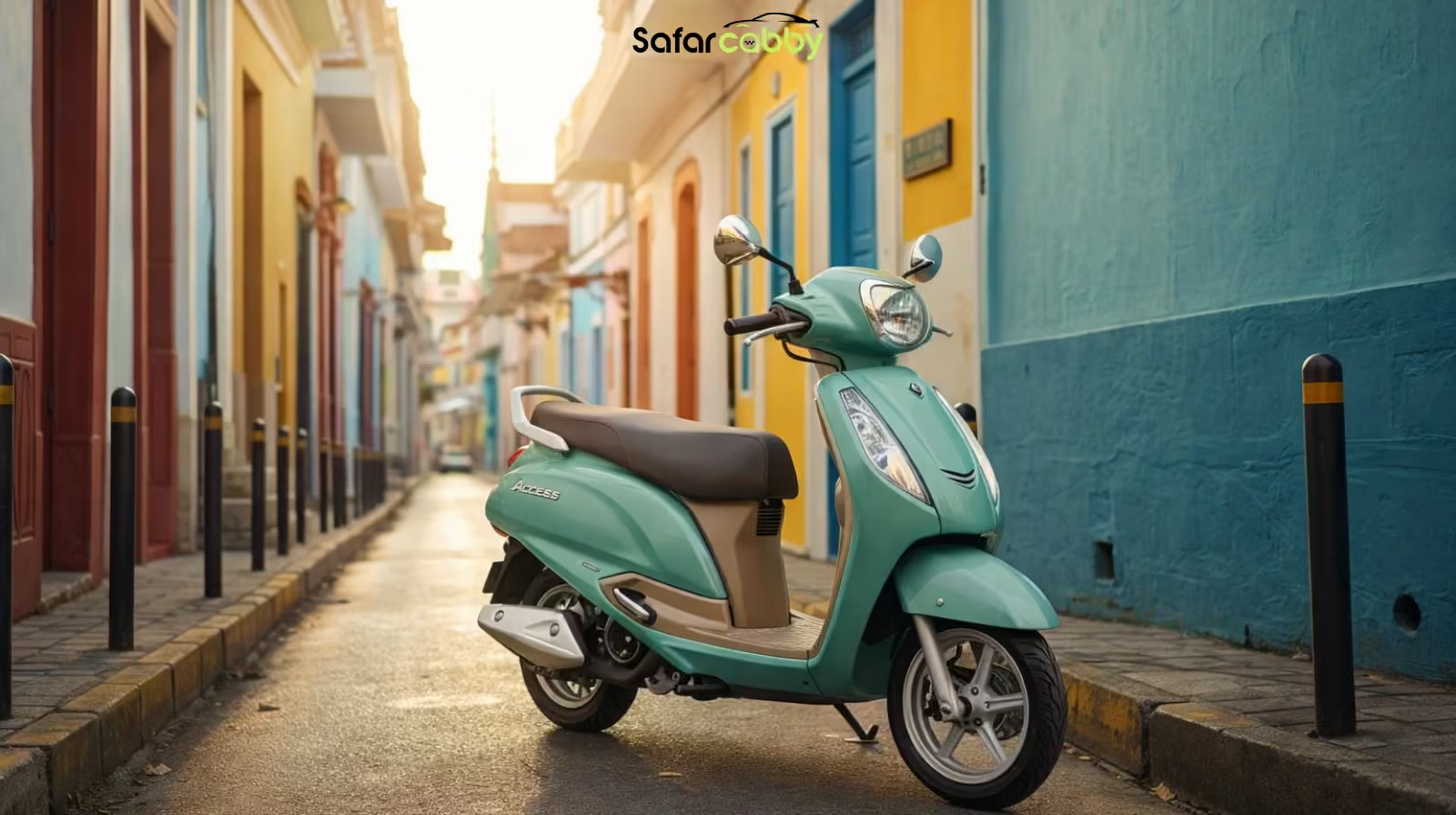
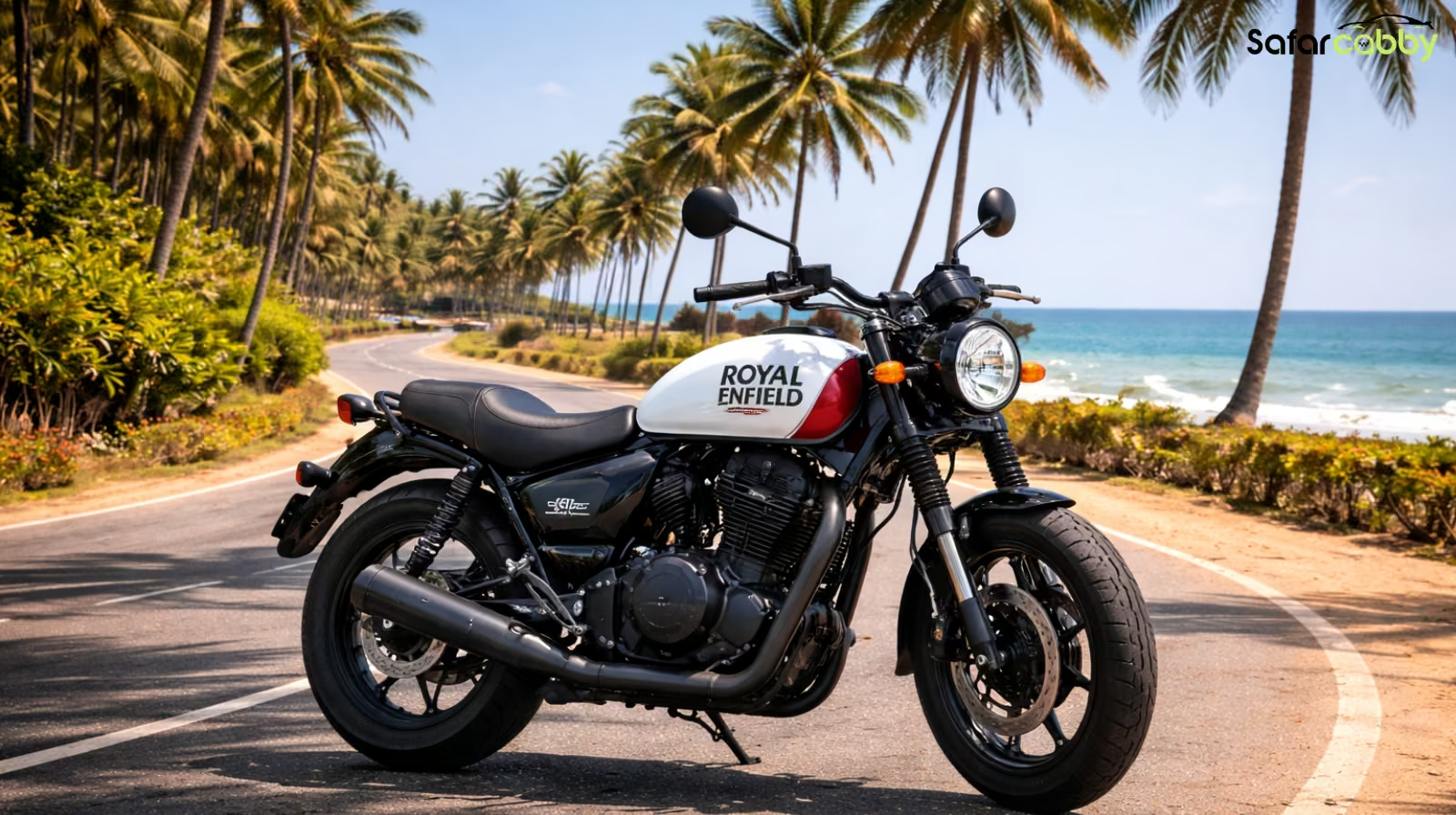
Today, bike rental in Goa is a fully established industry. Vendors operate out of beach shack side rooms, guesthouse lobbies, standalone rental shops on the Calangute–Baga road, and increasingly through platforms like SafarCabby that standardise the experience. The bikes are predominantly gearless scooters - Activas, Jupiters, Ntorqs - because the terrain is flat, the roads are short, and the average tourist is not looking for a Royal Enfield for a 3-kilometre beach ride. That said, Royal Enfield Classic 350 and Bullet 350 rentals are very much available for riders who want to cover more ground or ride the Goa–Dudhsagar route through the Western Ghats.
Bike Rental Prices in Goa
Pricing for bike rental in Goa varies more than most cities because the market is seasonal, demand is extremely high between November and February, and vendor pricing responds to occupancy levels at nearby resorts. That said, the ranges below reflect what most riders actually pay when booking through a verified platform rather than negotiating on the beach.
| Bike Category | Engine / Type | Ideal Use Case | Estimated Starting Price (per day) |
|---|
| Scooty / Scooter rental in Goa | Honda Activa, TVS Jupiter, TVS Ntorq (110–125cc) | Beach-hopping, North Goa day rides, market runs | ₹300 – ₹500 |
| Standard Motorcycle rental in Goa | Bajaj Pulsar 150, Hero Splendor (150cc) | Longer coastal routes, Panjim day rides | ₹400 – ₹600 |
| Royal Enfield rental in Goa | Classic 350, Bullet 350 (346cc) | Dudhsagar rides, South Goa exploration, scenic highway runs | ₹700 – ₹1,200 |
| Adventure motorcycle rental in Goa | Royal Enfield Himalayan, KTM 390 Adventure | Multi-day rides into the Western Ghats, Mollem forest routes | ₹1,200 – ₹2,000 |
| Electric scooter hire in Goa | Ather 450X, Ola S1 (where available) | Short resort-to-beach runs, eco-conscious day riders | ₹400 – ₹700 |
Peak season - roughly mid-November through the first week of January - sees scooter pricing climb toward the higher end of these ranges, and weekly rental deals become harder to negotiate. Most riders who book during October and November, just before the Christmas rush, find the best combination of good weather and fair pricing. The monsoon months (June through September) drop prices significantly, but several beach roads become waterlogged and the ride to Dudhsagar Falls is typically closed from July onwards due to the Bhagwan Mahavir Wildlife Sanctuary trail conditions.
Security deposits typically range from ₹1,500 to ₹3,000 depending on the bike category. Fuel policy across most verified vendors in Goa is full-to-full - you receive the bike with a full tank and return it full. Helmets are included with every rental. Compare current vendor options and check live pricing on SafarCabby before confirming.
Popular Bike Rides from Goa
Goa to Dudhsagar Falls Bike Ride
The Dudhsagar ride is 60 kilometres from Panaji and takes riders through the Bhagwan Mahavir Wildlife Sanctuary on a forest road that narrows to single-lane stretches past Mollem. The falls themselves - four-tiered, 310 metres - are best seen between October and December when the water volume is highest. Many riders book a Royal Enfield on rent in Goa specifically for this route because the forest sections require a more stable ride than a 110cc scooter on wet gravel. SafarCabby vendors near Panjim and Madgaon are commonly used for this particular ride.
North Goa Beach Circuit - Calangute to Arambol
This is the ride most first-timers do on their first full day: Calangute north through Baga, Anjuna, Vagator, Chapora, Morjim, and all the way up to Arambol. The total one-way distance is about 35 kilometres, but most riders take four to five hours because every beach tempts a stop. A gearless scooty rental in Goa is perfectly adequate for this circuit - the roads are flat and well-surfaced between Calangute and Vagator, and the Chapora–Morjim stretch is one of the most scenic coastal roads in the state.
Goa to Old Goa Church Circuit Bike Ride
Old Goa is 9 kilometres east of Panaji on the banks of the Mandovi River, and the Basilica of Bom Jesus and Se Cathedral together form one of the most significant UNESCO World Heritage complexes in Asia. The road from Panaji to Old Goa is shaded and easy - a 20-minute scooter ride that no cab driver will bother with for less than ₹300. Riders who rent a bike in Goa and ride to Old Goa in the early morning have the church courtyard largely to themselves before 9am.
Goa to Cabo de Rama Fort Bike Ride
Cabo de Rama sits on a headland in South Goa, 75 kilometres from Calangute, and the approach road from Agonda - a laterite track that climbs through cashew groves - is the kind of riding that justifies the whole trip. The fort itself is largely in ruins, but the views across the Arabian Sea from the ramparts are unobstructed. Most riders who do this route start from Palolem or Agonda and combine it with the Butterfly Beach trail nearby.
Goa to Ponda Spice Plantation Bike Ride
Ponda, 30 kilometres from Panaji, is where Goa's spice plantation belt begins. The road through Khandepar and into the Ponda valley is tree-lined and rarely congested outside of morning market hours. Several spice estates - Sahakari Farms and Pascoal Spice Village among them - offer tours and Goan thali lunches that are worth timing a ride around. A standard motorcycle rental in Goa handles this route easily.
Goa to Chapora Fort via Vagator Beach Bike Ride
The ride up to Chapora Fort from Vagator Beach is steep, short (about 2 kilometres), and the view from the top - immortalised by the film Dil Chahta Hai - looks over both Vagator and Chapora beach simultaneously. The fort itself is accessible only on foot from the parking area below, but the road up to the base is a favourite for riders who want a short but scenic morning loop from their Calangute or Anjuna guesthouse.
Goa to Mollem National Park Bike Ride
Mollem is the gateway to the Western Ghats from Goa's eastern border, about 57 kilometres from Panaji via the NH4A. The road passes through Ponda and climbs into the forest at Tambdi Surla, where a 12th-century Kadamba temple sits in near-complete isolation. The ride through the Bhagwan Mahavir Wildlife Sanctuary in the early morning - when the forest is still cool and the road is empty - is one of the genuinely underrated two-wheeler experiences in Goa.
South Goa Circuit - Margao to Palolem to Agonda
This 45-kilometre loop starts at Margao's market, heads south through Benaulim and Cavelossim to Palolem, then cuts inland to Agonda - a beach that still has no party shacks, no loud music, and no crowd past 8pm. The road between Palolem and Agonda is 10 kilometres of laterite through a small hill, and the descent into Agonda is one of those moments where the whole bay opens up in front of you at once. A scooty rental in Goa handles this loop without issue.
Planning Your Riding Days in Goa
Most travellers spend three to five days in Goa, and the most efficient way to structure the riding is to base yourself in one location and radiate outward - rather than trying to cover both North and South Goa from a single hotel every day. If you are staying in Calangute or Anjuna, the North Goa beach circuit, Chapora Fort, and the Old Goa church ride can each be done as separate half-day outings. The Dudhsagar ride and the Mollem forest route both require a full day and an early start - ideally leaving by 7am to clear the Mollem checkpoint before the jeep queue builds up.
Half-day rentals (4 hours) work well for the Anjuna flea market run or the Old Goa circuit. Full-day rentals cover the Dudhsagar and the North Goa beach loop comfortably. Weekly rentals are worth considering if you are staying seven days or more - the per-day cost drops significantly, and you avoid the daily pickup logistics. Most SafarCabby vendors in Goa offer weekly self-drive packages that include one helmet per bike and a full-to-full fuel arrangement.
If you land in Goa at noon with a beach in mind and no transport booked, the nearest SafarCabby vendor can hand over an Activa within 30 minutes - and you will reach Palolem before the afternoon crowd fills the shore. That kind of same-day availability exists because SafarCabby maintains an active vendor network across Calangute, Panjim, Madgaon, and Margao, rather than relying on a single depot.
The Coastal Roads That Make This Worth It
The Sinquerim–Candolim stretch, just south of Calangute, is the smoothest road in North Goa - wide, lined with casuarina trees, and quiet enough at 7am that you can ride it without touching the brakes for ten minutes straight. The road between Morjim and Ashvem, on the other hand, is laterite and unpaved in sections - manageable on a scooter, but worth slowing down for after rain. Riders who have done the Anjuna–Vagator loop in the evening, when the sun drops behind the sea at the Vagator headland, consistently describe it as the best ₹400 they spent in Goa.
The coastal road from Vasco da Gama to Bogmalo Beach - a 6-kilometre stretch that passes the Mormugao Port - is rarely mentioned in travel guides but is used by local riders every morning. The road runs along the edge of a headland with the Arabian Sea below on one side and the port cranes on the other. It is not scenic in the conventional sense, but it is specific to Goa in a way that few tourist routes are.
Insider note for riders: The last fuel station before the Mollem forest stretch on the NH4A is at Ponda town. After Ponda, there are no petrol pumps for approximately 30 kilometres until you reach the Karnataka border at Belagavi direction. Fill up at Ponda regardless of your gauge reading - this is a consistent gap that catches first-time riders on the Dudhsagar route.
Best Time to Ride in Goa
October through February is the window most riders aim for. The skies are clear, the temperature stays between 24°C and 32°C, and the sea is calm enough that beach rides feel genuinely rewarding rather than just functional. November is arguably the sweet spot - the monsoon has fully cleared, the beaches are clean, the roads are dry, and the Christmas–New Year price surge has not yet hit. Most riders who rent a bike in Goa during early November find the roads noticeably less crowded than December, when Calangute and Baga can become genuinely difficult to navigate on two wheels.
March and April are hot but still rideable - the crowds thin significantly after Holi, and South Goa in March has a particular quality of light in the late afternoon that photographers ride specifically to catch. The monsoon months from June to September bring heavy rainfall, and while some riders enjoy the lush green transformation of the landscape, several beach access roads flood and the Dudhsagar trail is officially closed. That said, the Panaji–Old Goa–Ponda circuit remains rideable year-round.
Off the Usual Trail: Rides That Most Tourists Miss
The Divar Island ferry crossing from Old Goa is one of the more unusual riding experiences in Goa. A small government ferry crosses the Mandovi River from Ribandar to Divar Island - the crossing takes four minutes, fits about eight bikes, and costs next to nothing. The island itself is barely 5 square kilometres, with Portuguese-era houses, a single main road that loops around the perimeter, and almost no tourist traffic. The ride around Divar takes 25 minutes and feels like a different era entirely.
Chorao Island, accessible via a similar ferry from Ribandar, is home to the Dr Salim Ali Bird Sanctuary - a mangrove reserve where early morning riders sometimes spot kingfishers and egrets from the road along the sanctuary boundary. Neither island appears on standard tourist maps, and the ferry timings mean most day-trippers never bother. Both are worth a half-day if you have a bike and a morning free.
The laterite road between Cabo de Rama and Agonda - specifically the 4-kilometre section that cuts through the headland - has a loose gravel surface that worsens after heavy rain. Riders on a 110cc scooter should slow to 20–25 kmph on this section. It is not dangerous if approached carefully, but it is the kind of road condition that surprises riders who are used to the smooth NH66.
Food Stops Best Reached on Two Wheels
Ritz Classic, Panaji: The pork sorpotel and beef chilly fry at this no-frills Goan restaurant near the Municipal Garden are among the most consistently good in the state. Parking a scooter outside takes thirty seconds - parking a car in central Panaji takes considerably longer. The restaurant fills up by 1pm, so the riders who arrive at 12:30 on a scooter reliably get a table before the walk-in crowd.
Florentine Restaurant, Saligao: Saligao is a village 5 kilometres inland from Calangute, and Florentine is the kind of place that has no signboard visible from the main road. You find it by riding slowly through the village lanes - which is exactly the point. The prawn balchão is worth the detour, and the village itself, with its laterite chapel and mango trees, is the Goa that exists 10 minutes from the beach but feels entirely removed from it.
Cafe Bhonsle, Margao: Margao's municipal market area has a morning food culture that most tourists never see because no cab bothers routing through it. On a scooter, you can park at the market entrance and walk to Cafe Bhonsle for a Goan breakfast of poee bread, coconut chutney, and fish curry that costs under ₹100. The market itself - vegetables, spices, dried fish - is worth an hour of slow riding through the surrounding lanes.
Photography Rides in Goa
- Anjuna–Vagator Headland at Sunrise: Ride the 4-kilometre stretch from Anjuna beach road to the Vagator headland viewpoint between 6am and 6:45am. The light on the red laterite cliffs above Little Vagator Beach is at its best in this window. A scooter is the only practical vehicle for the narrow descent to the viewpoint parking area.
- Old Goa Church Complex at 7:30am: The Basilica of Bom Jesus and Se Cathedral face east - the morning light hits the baroque facades directly until about 9am, after which the angle flattens. Ride from Panaji at 7am, park at the church courtyard entrance, and you will have the space almost entirely to yourself for the first hour. No tour bus arrives before 9:30am.
- Divar Island Perimeter Road at Late Afternoon: The Portuguese-era houses on Divar Island face west, and the 4–5pm light on their painted facades - ochre, pale yellow, colonial green - is the kind of photography that does not happen anywhere else in Goa. Take the Ribandar ferry, ride the perimeter loop clockwise, and stop at the Church of Our Lady of Piety for the elevated view over the Mandovi River at golden hour.
Choosing the Right Bike for Goa
For most travellers doing beach-hopping and day rides within North or South Goa, a 110–125cc gearless scooter - an Activa, Jupiter, or Ntorq - is the correct choice. The roads are flat, the distances are short, and a gearless scooter is easier to handle in the occasional beach-road sand drift. There is no terrain in coastal Goa that requires more than 125cc.
If you are planning the Dudhsagar ride or the Mollem forest route, upgrade to a Royal Enfield Classic 350 rental in Goa. The forest road sections are unpaved in stretches, and a heavier motorcycle with better ground clearance handles them more comfortably. The Classic 350 also has a larger fuel tank - relevant given the Ponda fuel gap mentioned earlier.
For the Cabo de Rama and Agonda circuit in South Goa, a standard 150cc motorcycle (Pulsar or equivalent) sits between the two extremes - more stable than a scooter on the laterite sections, but without the fuel consumption of a Royal Enfield. SafarCabby vendors in Margao and Madgaon typically carry this category alongside the standard scooter fleet.
Riders who are not comfortable on a geared motorcycle should stick to scooters. Most of Goa's best riding does not require gears, and the confidence of riding a familiar vehicle matters more than the engine size on a short coastal route. The two-wheeler rental in Goa market caters very well to gearless riders - scooter availability is the highest of any bike category across all verified vendors.
Where to Pick Up Your Rental Bike in Goa
SafarCabby's vendor network covers pickup points across both North and South Goa. In North Goa, the primary pickup locations are Calangute (near the main beach road), Anjuna (near the Wednesday flea market ground), Mapusa (the commercial hub for northern Goa), and Panaji (the state capital, near the Kadamba bus terminal). In South Goa, vendors operate near Margao railway station, Madgaon, and Palolem beach road.
If you are arriving at Goa International Airport (Dabolim), the nearest SafarCabby pickup point is in Vasco da Gama, approximately 4 kilometres from the terminal. Riders typically take a short auto or cab from the airport to the vendor location and collect the bike there - a 15-minute process. The Mopa Airport (North Goa) has vendor coverage in Mapusa, about 20 kilometres south, which is the practical collection point for arrivals at that terminal.
What to Ride, When, and With Whom
The Goa Carnival in February and the Shigmo festival in March bring processions through Panaji and Mapusa that close several central roads for 4–6 hours. Riders during these periods should avoid the Panaji city centre between 5pm and 10pm and use the bypass roads through Porvorim. The festival atmosphere is worth experiencing, but navigating a scooter through a Carnival procession crowd is not. Plan your ride timing around the event schedule rather than trying to ride through it.
The Sunburn Festival at Vagator (typically December) and the various New Year's Eve beach parties across North Goa create significant late-night traffic on the Calangute–Anjuna–Vagator road between midnight and 3am. Riding in this window is legal but inadvisable - the combination of crowd overflow and low-visibility riding conditions makes it the highest-risk period for two-wheeler riders in Goa's calendar year. Return to your accommodation before midnight on peak party nights and collect your bike the next morning.
Weekend Rides from Goa
Goa to Gokarna (Karnataka) - 140 km
Gokarna's Om Beach and Kudle Beach offer the kind of quiet that North Goa has largely stopped providing. The ride south on NH66 through Karwar is one of the most scenic coastal highway stretches in India - the road runs close to the sea for long sections through Karnataka's Uttara Kannada district. Many riders rent a bike from Goa and do Gokarna as a two-day overnight ride, returning via the same coastal highway.
Goa to Dandeli - 120 km
Dandeli Wildlife Sanctuary in Karnataka sits at the edge of the Western Ghats, and the ride from Panaji through the Ghat roads via Belgaum direction is a genuine forest experience. The road climbs through dense deciduous forest after Anmod, and the descent into the Kali River valley is one of the better riding sequences within a day's reach of Goa. Kayaking and river camping at Dandeli combine well with the ride.
Goa to Hampi - 340 km
This is a longer two-day ride that serious motorcycle riders do regularly from Goa. The NH67 through Hubli is the practical route. Hampi's boulder landscape and Vijayanagara temple ruins are a specific visual reward for the distance. Most riders who do this route on a Royal Enfield rental in Goa consider it one of the better long-weekend rides in South India.
Goa to Coorg (Madikeri) - 320 km
The coffee estate roads between Madikeri and Bhagamandala are best ridden at low speed with the windows - metaphorically speaking - wide open. The route from Goa goes through Mangalore and into the hills, and the last 80 kilometres of climbing through the Kodagu coffee belt is the payoff. A two-day ride with an overnight at Madikeri makes this manageable.
Goa to Jog Falls - 230 km
Jog Falls, at 253 metres, is one of the highest plunge waterfalls in India and is at its most dramatic between September and November when the Sharavathi River is running full. The ride from Panaji goes through the Ghat section at Sirsi - a winding forest climb that Royal Enfield riders in particular enjoy. This is a full-day ride requiring an early start.
Goa to Murudeshwar - 160 km
Murudeshwar's enormous Shiva statue on the Arabian Sea coast is visible from the NH66 before you reach the town. The ride from South Goa through Karwar and Ankola is straightforward coastal highway, and the beach at Murudeshwar is cleaner and less crowded than any beach in Goa's tourist belt. A comfortable day ride on any bike in the rental fleet.
 Trusted
  Verified Bike On Rental